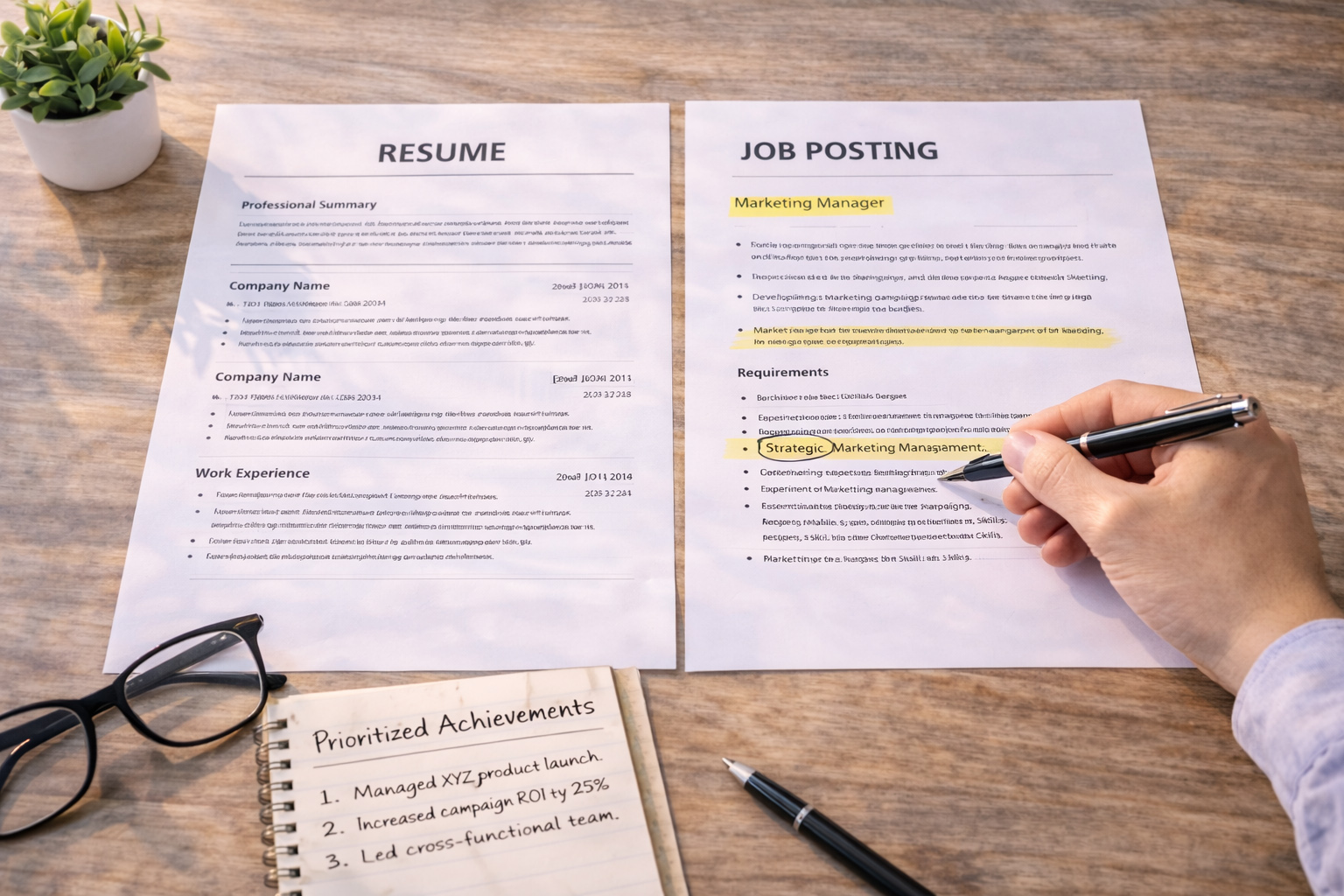
Your resume should be a concise story that explains where you’ve been, what you can do, and where you want to go. Begin by defining a clear target role and audience so every line supports that goal. Keep sentences direct and avoid long lists of duties that dilute impact. The right structure helps hiring managers and systems quickly see your fit.
Start with a clear job target
Identify the role or discipline you want and tailor your headline or summary to reflect that focus. A specific target helps you choose relevant accomplishments, keywords, and metrics rather than trying to be everything to everyone. This reduces mixed signals and makes it easier for a hiring manager to visualize you in the role. Clarity at the top guides the rest of the document and improves response rates.
Use a short summary or headline that highlights your key value in one line. Keep it aligned with the job description and repeat primary keywords naturally throughout your resume.
Structure around accomplishments, not tasks
Shift each experience entry from listing responsibilities to showcasing measurable outcomes. Start bullets with action verbs, include context, and quantify results when possible to convey impact. Metrics like percentages, revenue, time saved, or team size provide concrete evidence of performance. This approach turns generic statements into compelling proof of ability.
Limit each role to the three to six most relevant achievements. Prioritize results that match the target role to strengthen narrative coherence.
Optimize for both humans and systems
Resumes need to pass automated filters while remaining readable to recruiters. Use standard section headings, avoid unusual fonts or graphics, and place critical keywords in context. Balance keyword density with natural phrasing so your resume reads well and still ranks for relevant search terms. Keep file formats compatible with most applicant tracking systems.
- Use simple headings like Experience, Education, and Skills.
- Include a few role-specific keywords from the job posting.
- Avoid images, tables, and excessive columns that may break parsing.
Think of your resume as a dual-channel message: optimized for machines but crafted to persuade people during a quick scan. Small formatting choices can improve both readability and parsability.
Polish language and presentation
Consistent tense, clean layout, and error-free text communicate professionalism and attention to detail. Keep formatting minimal and consistent: same bullet style, matching dates, and aligned margins. Use active voice and strong verbs; remove filler words that reduce clarity. Ask a trusted reviewer to scan for typos and ambiguous phrasing before sending.
Final proofreading and a targeted file name complete the presentation. A polished resume gives you confidence and increases the chance of an interview.
Conclusion
Designing a focused resume narrative means aligning every element with a clear job target and measurable impact. Prioritize achievements, format for both people and systems, and polish language to demonstrate professionalism. These steps make your resume a concise, persuasive story that advances your career goals.