






Effective management is a blend of clarity, consistency, and continuous learning.
Leaders who build habits around priorities and communication see sustained improvement.
This article outlines practical practices managers can adopt to guide teams toward stronger performance.
Each approach emphasizes action, measurement, and respectful accountability.
These habits fit varied team sizes and work styles when adapted.
Set Clear Priorities
Define a small set of priorities that align with the organization’s goals and share them with the team. Use weekly planning to translate priorities into concrete tasks and deadlines so everyone knows what matters now. Limit work-in-progress to keep attention focused and reduce context switching. When priorities change, communicate the reasons and update commitments promptly. Assign owners for each priority so progress and blockers are visible.
- Create a top-three list each quarter.
- Review progress in short stand-ups.
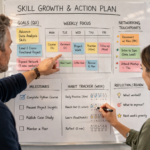
- Use visual boards to show status.
Regularly revisit priorities in one-on-ones and team meetings. This builds shared ownership and prevents drift. Over time this practice simplifies decision making and resource trade-offs.
Cultivate Feedback and Growth
Build a feedback-rich environment where praise and correction are timely and specific. Encourage peer feedback alongside managerial coaching so learning happens across roles. Pair feedback with clear development steps, such as micro-projects, shadowing, or focused training. Schedule consistent checkpoints to discuss progress rather than waiting for annual reviews. Model receiving feedback openly to normalize the practice across the team.
When people see feedback as an opportunity, they take more initiative. That shifts culture toward continuous improvement. Leaders should recognize improvements publicly to reinforce progress.
Measure Progress and Adapt
Choose a handful of meaningful measures that reflect outcomes rather than activity. Combine quantitative indicators like cycle time with qualitative signals such as customer feedback or team sentiment. Use short feedback loops to evaluate initiatives and stop what doesn’t move the needle. Treat metrics as guideposts, not punishments, to maintain trust and learning. Ensure metric definitions are clear so measurements are reliable and comparable.
- Lead time and delivery predictability.
- Customer satisfaction and issue recurrence.
- Team engagement and retention signals.
Regular metric reviews help identify bottlenecks early. Adjust resource allocation and processes based on trends, not hunches. Document experiments and share lessons so the whole team benefits.
Conclusion
Small, consistent management habits compound into measurable team improvements across contexts and time.
Focus on clear priorities, timely feedback, and meaningful measures to guide change and foster learning.
Practice these approaches and adapt them to your context for ongoing gains.