






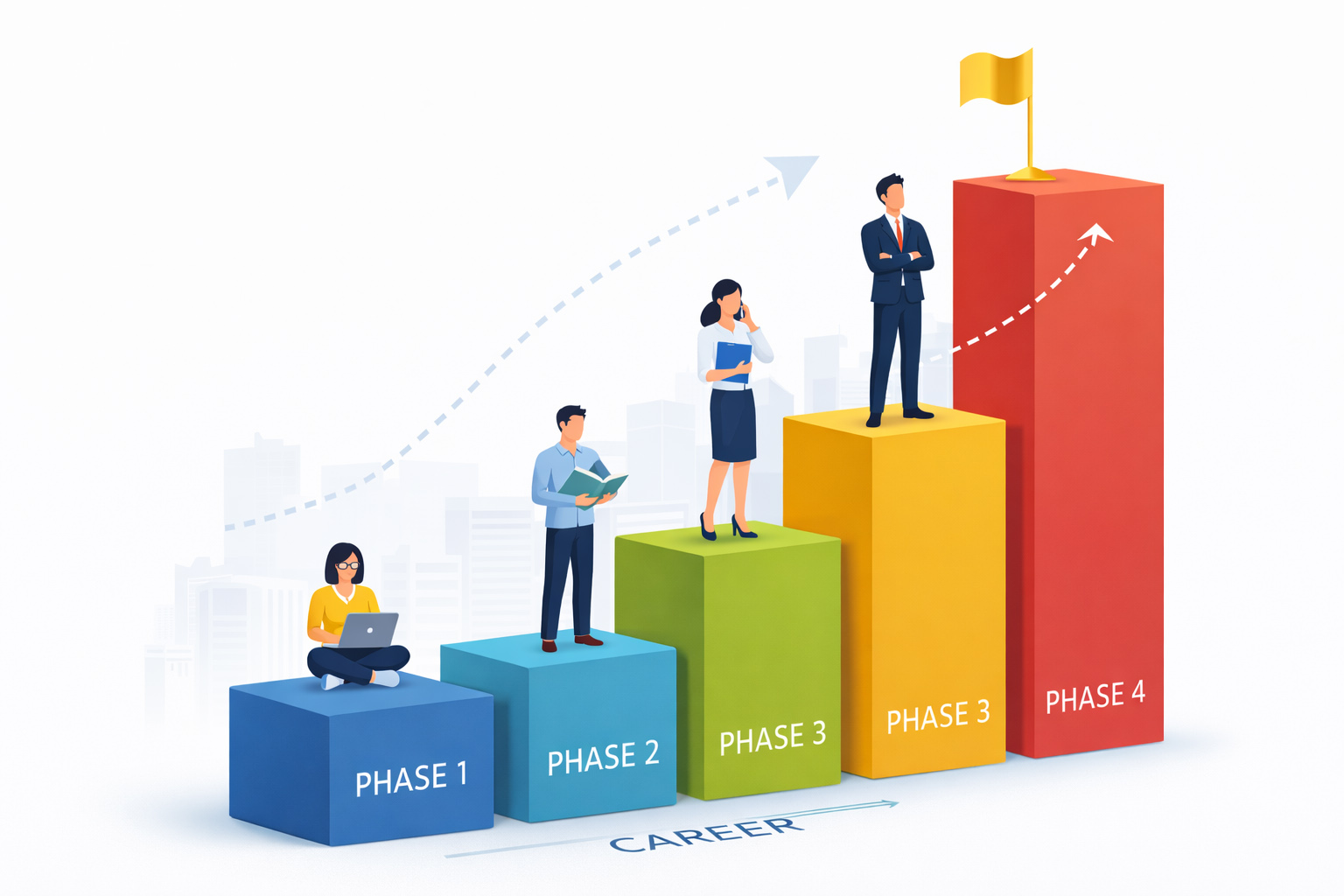
The concept of career segmentation involves breaking your career journey into distinct phases. This strategy, often overlooked, can provide clarity, direction, and purposeful development in professional life. Rather than viewing your career as one long, continuous track, segmentation allows for reflection, redirection, and growth by focusing on each stage’s unique goals and challenges.
By segmenting your career path, you can assess achievements, recalibrate ambitions, and ensure steady progress. This article explores the advantages of career path segmentation and how dividing your career into phases can lead to a more fulfilling and purposeful professional life.
Clarifying Career Goals
Segmenting your career allows you to set specific, actionable goals for each phase of your professional life. Rather than setting a long-term, nebulous goal of “success,” segmenting your career allows you to focus on concrete milestones, such as mastering a skill, switching industries, or achieving a leadership position. Each segment of your career can represent a distinct goal or set of competencies that will contribute to your overall career vision.
This approach not only helps to keep your professional growth aligned with personal interests and industry trends, but it also provides a sense of accomplishment as you complete each phase.
Improved Work-Life Balance
Segmenting your career encourages you to view different phases of life with a realistic approach. You might decide that one phase of your career will focus on personal development or skill-building while another phase might prioritize leadership opportunities or transitioning into a new industry. This flexibility allows you to balance your career ambitions with personal aspirations, making it easier to achieve a healthy work-life balance.
For example, in one segment, you may work long hours to gain critical experience, while in another, you may focus on achieving a more manageable work-life balance as you pursue a leadership role.
Managing Career Transitions
One of the most significant advantages of career segmentation is how it helps manage career transitions. Each phase of your career may require a different set of skills or a new mindset. Whether you’re transitioning from a technical role to management, moving industries, or shifting to a new geographic location, career segmentation provides the mental framework for handling change.
Knowing that your career has distinct phases also helps you embrace transitions as natural and important aspects of your professional journey. Rather than feeling overwhelmed by a shift in direction, you can view it as an opportunity to start fresh and strategically navigating the next phase.
Enhanced Self-Reflection and Continuous Learning
Career segmentation encourages reflection at regular intervals. Each phase offers a chance to evaluate where you’ve been, what you’ve learned, and what you still want to accomplish. Regular reflection helps you assess if you are still aligned with your values and career objectives, making it easier to identify areas for improvement and continuous growth.
You might also find that career segmentation fosters lifelong learning. After completing one phase, you may seek new challenges or learning opportunities to refresh your skills, ensuring that you’re always evolving.
Building Stronger Networks
By segmenting your career into phases, you create the opportunity to build different types of networks. For example, when you switch industries or move to a new phase of leadership, you meet new people with varied experiences and skills. These relationships may play pivotal roles in future phases of your career, providing mentorship, job leads, or collaborative opportunities.
Additionally, each phase of your career can help you develop unique expertise, giving you a diversified network that spans different areas of knowledge, industries, and leadership levels.
Conclusion
Segmenting your career path into distinct phases is a powerful strategy for sustained professional growth. It provides clarity, allows for better work-life balance, and enables more focused personal and career development. By embracing career segmentation, you can manage transitions, continually learn, and ensure your career trajectory remains aligned with your evolving goals and values. Instead of viewing your career as one long stretch, break it down into actionable segments that reflect where you are and where you want to go.