

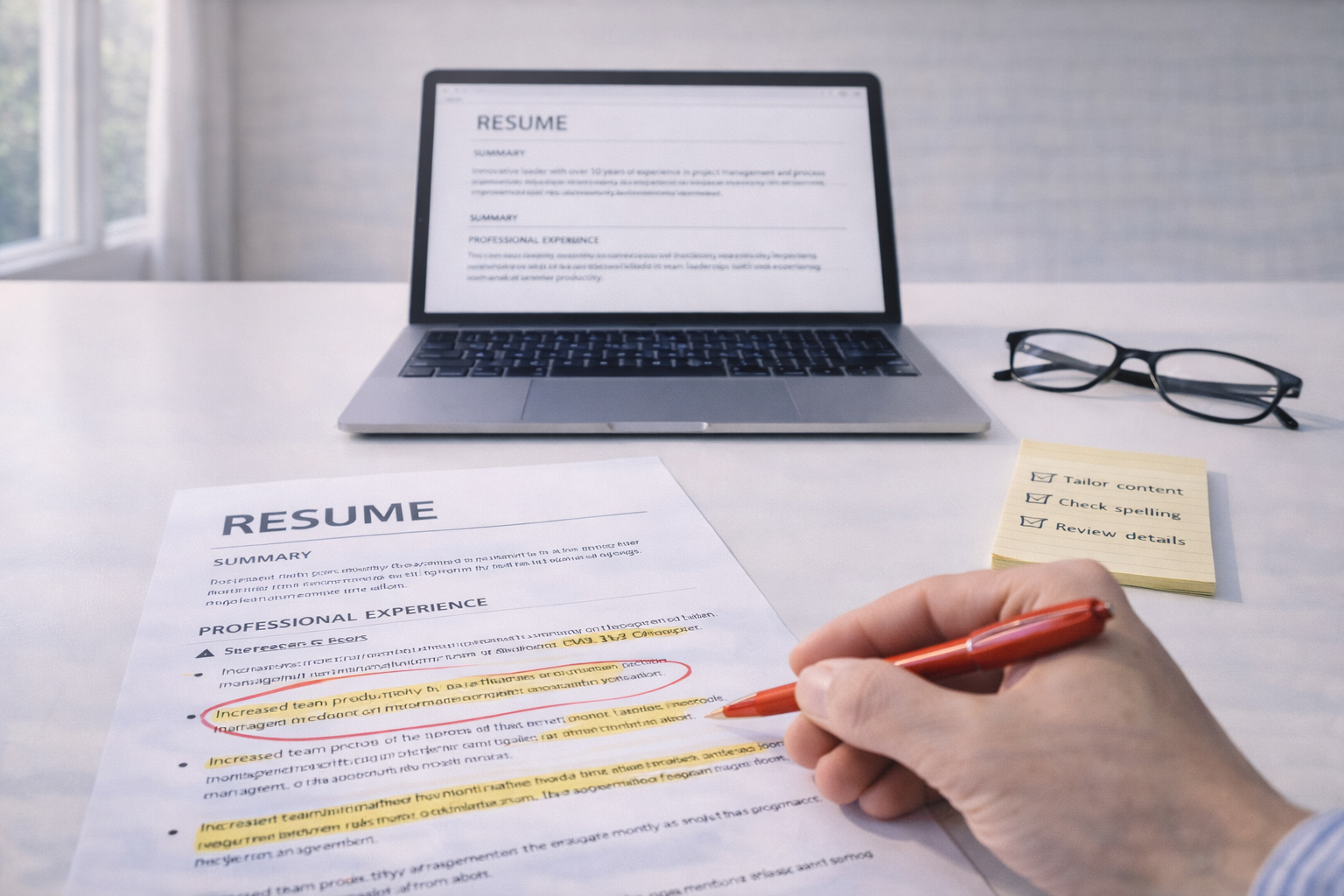
Your resume is often the first impression a hiring manager gets of your work. A concise, achievement-focused document communicates impact faster than lengthy duty lists. This article outlines practical ways to shift emphasis toward measurable results and clearer structure. Follow these steps to make each line of your resume pull its weight.
Focus on Achievements, Not Responsibilities
Employers scan resumes for evidence of real outcomes, so replace generic duties with specific achievements. Use action verbs, quantify results when possible, and frame accomplishments in terms of value added — revenue, time saved, efficiency gains, or customer impact. Prioritize three to five accomplishments per role that best match the job you want. Writing this way turns a passive list into a compelling narrative of contribution.
Keep each bullet concise and outcome-driven to increase readability. When numbers aren’t available, describe the scale or context to show significance.
Structure and Readability for Quick Scans
A clear layout helps recruiters find key information in seconds, so use consistent headings, short bullets, and generous white space. Lead with a brief professional summary or profile that highlights your top strengths and most relevant achievements. Choose a readable font and organize sections in order of importance for the target role. Avoid dense paragraphs; prioritize scan-friendly lines that communicate impact immediately.
- Contact and headline
- Summary or objective
- Experience with achievement bullets
- Education and relevant skills
Simple formatting helps both human readers and applicant tracking systems. Keep decorative elements minimal and let content shine.
Keyword Strategy and Tailoring
Matching language to the job description improves both ATS pass rates and recruiter recognition. Identify the top required skills and mirror relevant phrases naturally in your bullet points and summary. Prioritize keywords tied to measurable achievements rather than repeating them without context. Tailor your resume for each application by highlighting the experience most aligned with the role’s priorities.
Maintaining a master resume makes customization faster and ensures you never leave out important capabilities. Small edits for alignment can dramatically increase interview callbacks.
Polish, Proofread, and Iterate
Errors and inconsistency undermine otherwise strong content, so proofread carefully and ask a colleague to review for clarity. Remove outdated or irrelevant information to keep the resume focused and under two pages for most professionals. Periodically update accomplishments as you complete notable projects to avoid forgetting key wins. Continuous refinement keeps your resume current and competitive.
Save versions for different job types and track which approaches yield interviews. Regular iteration turns your resume into an evolving tool rather than a static document.
Conclusion
Prioritize concise, measurable accomplishments and clean structure to make your resume stand out. Tailor language to each role and proofread thoroughly to maintain credibility. Small, thoughtful edits can significantly increase your chances of landing interviews.
