

Your resume is a compact narrative that should guide hiring managers through your progression and potential. A strategic resume emphasizes outcomes, relevant skills, and clear signals that match the role you want. Focused choices about content, order, and language make a resume easier to scan and more likely to invite interviews. This article outlines practical steps to sharpen your résumé so it reflects purposeful career movement.
Prioritize What Employers Need
Start by analyzing job descriptions and industry norms to identify the competencies that matter most. Prioritizing those elements means placing relevant skills and achievements near the top, where recruiters and applicant tracking systems will find them. Resist the urge to include everything; curated content reads as more confident and credible. This approach makes it clearer why you are a fit for the target role.
Trim older or unrelated duties and keep space for recent, high-impact examples. A concise, needs-focused resume increases the chance that your best qualifications are noticed quickly.
Quantify Achievements Simply
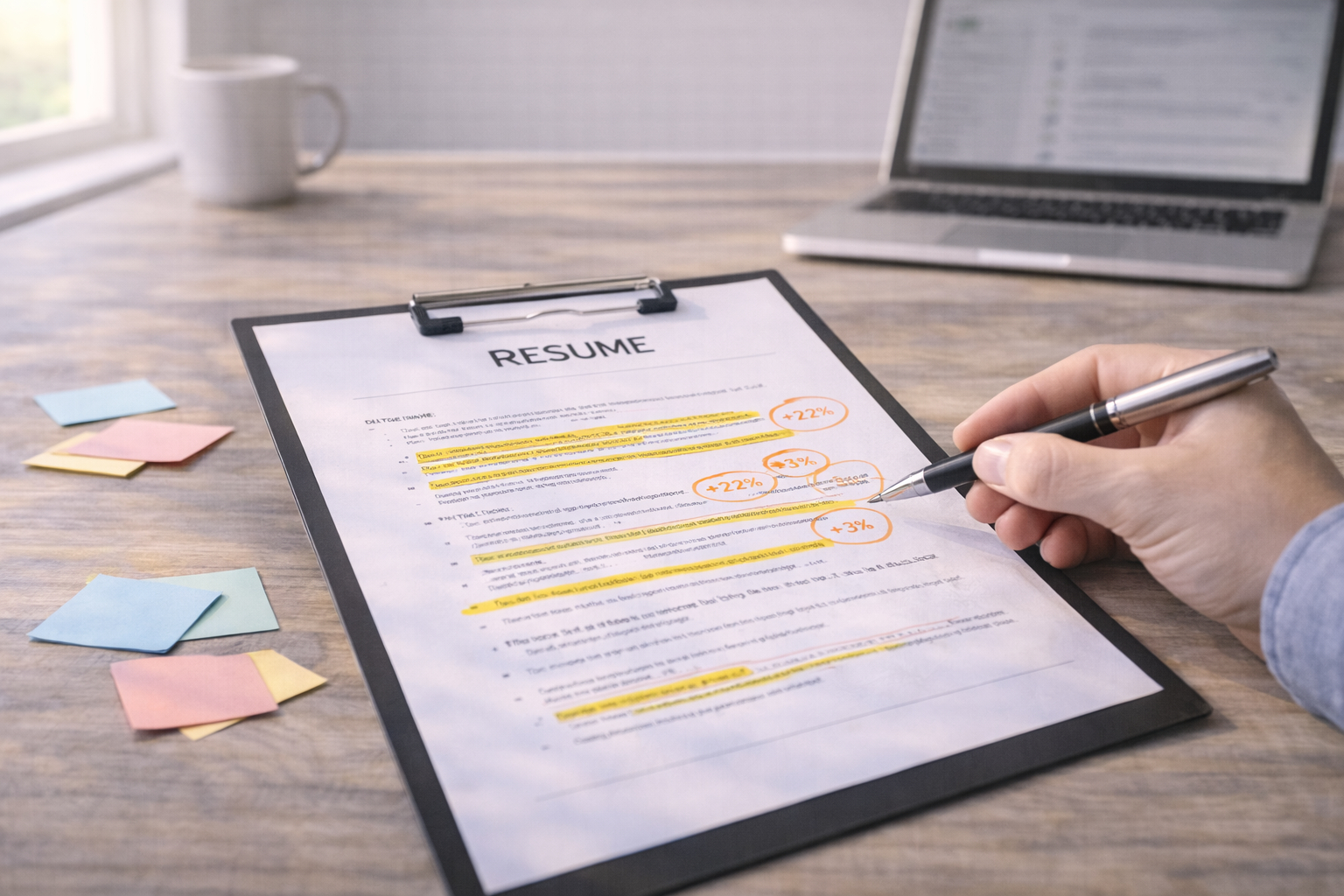
Numbers and specific results translate experience into demonstrable value for employers. Choose a few metrics that reflect scale, efficiency, revenue, or improvement and weave them into bullet points and summaries. Even modest improvements presented clearly—like percentage increases or time savings—help hiring managers picture your contribution. Avoid vague terms and replace them with concrete outcomes whenever possible.
- Revenue or cost impact: percent or dollar figures.
- Efficiency gains: time saved or process improvements.
- Scope: team size, project budget, or user counts.
Strategic metrics turn a list of duties into a persuasive account of what you accomplished. They provide reliable anchors for conversations during interviews.
Design for Rapid Scanning
Visual clarity speeds understanding: readable fonts, consistent spacing, and clear headings guide the eye. Use short bullet points that begin with active verbs and keep each item focused on a single result or responsibility. Group related experiences and skills under relevant headings so readers can quickly find what matters. A clean layout communicates professionalism before anyone reads a single sentence.
Limit sections to what supports your current goal and avoid decorative elements that distract. The easier it is to scan, the longer a recruiter will engage with your resume.
Conclusion
Think of your resume as a strategic summary that highlights progression, measurable outcomes, and relevance to the role you seek. Prioritize content, quantify impact, and present it in a clean, scannable format. Those choices increase clarity and help you stand out in a competitive applicant pool.
