







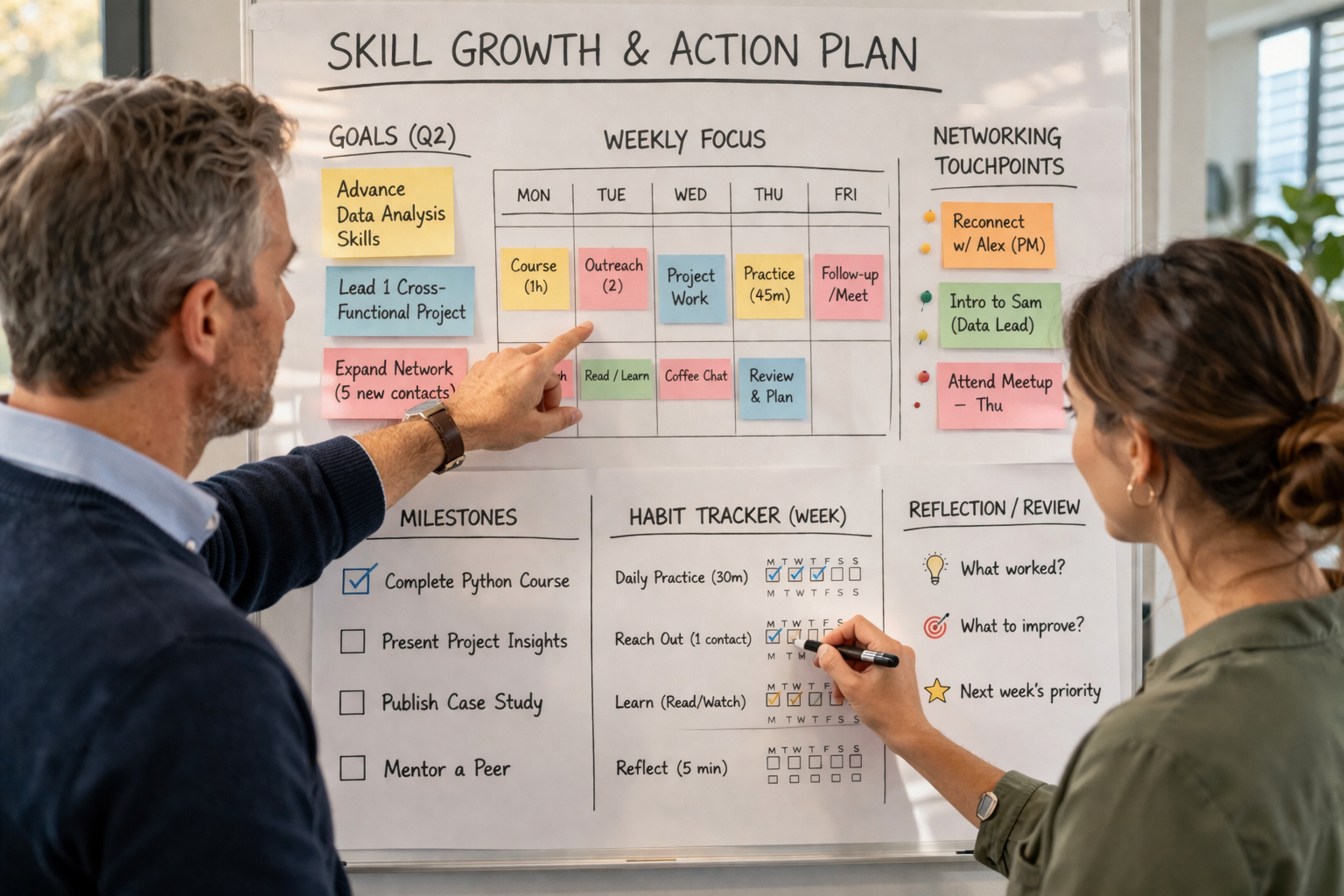
In a shifting job market, deliberate structure matters more than luck. Small, repeatable actions compound into visible career momentum when they align with clear priorities. This article outlines a practical framework for translating goals into daily systems you can maintain. Use these steps to create predictable progress and keep focus during transitions.
Clarify Career Priorities
Begin by defining the outcomes that matter most over the next 6 to 18 months. Prioritize skills, responsibilities, or roles that will create leverage, and be specific about what success looks like. Limit your focus to two or three objectives to avoid diffusion of effort. Clear priorities make it easier to choose where to invest limited time.
Write these priorities where you see them daily and revisit them weekly. This keeps decisions aligned with long-term intentions.
Build Daily Habit Systems
Translate priorities into repeatable habits that fit your existing routine. Break each objective into micro-actions you can perform in 15–60 minutes, such as targeted learning, code reviews, or outreach messages. Consistency beats intensity; small tasks performed regularly compound faster than sporadic marathon efforts. Design simple triggers that remind you to act.
- Schedule two focused learning sessions weekly
- Send one thoughtful message to a new contact per week
- Review one metric of progress every Friday
Automate scheduling and remove friction so the habit survives busy periods. Over time these micro-actions become the building blocks of larger achievements.
Expand Influence Through Strategic Networking
Networking should be purposeful, not random. Focus on relationships that help you learn, give feedback, or open new opportunities, and invest in reciprocity. Mix shallow breadth with a few deep connections who understand and support your ambitions. Regular touchpoints maintain visibility without demanding large time investments.
Track conversations and follow up with value, such as sharing relevant articles or brief updates. Small gestures compound into a reputation that precedes you.
Measure Progress and Iterate
Establish simple metrics to know whether your habits are producing the intended outcomes. Use quantitative data where possible—completed projects, interviews, skills mastered—or qualitative signals like clarity and confidence in interviews. Review these measures monthly and adjust habits that aren’t moving the needle. Treat iteration as part of the system, not a sign of failure.
When a habit stops producing impact, experiment with a replacement rather than abandoning progress entirely. Maintain a learning mindset and adapt to changing contexts.
Conclusion
Small systems built around clear priorities create predictable career progress. Commit to consistent micro-actions, measure their effect, and iterate based on feedback. Over time, these disciplined habits compound into meaningful advancement.
