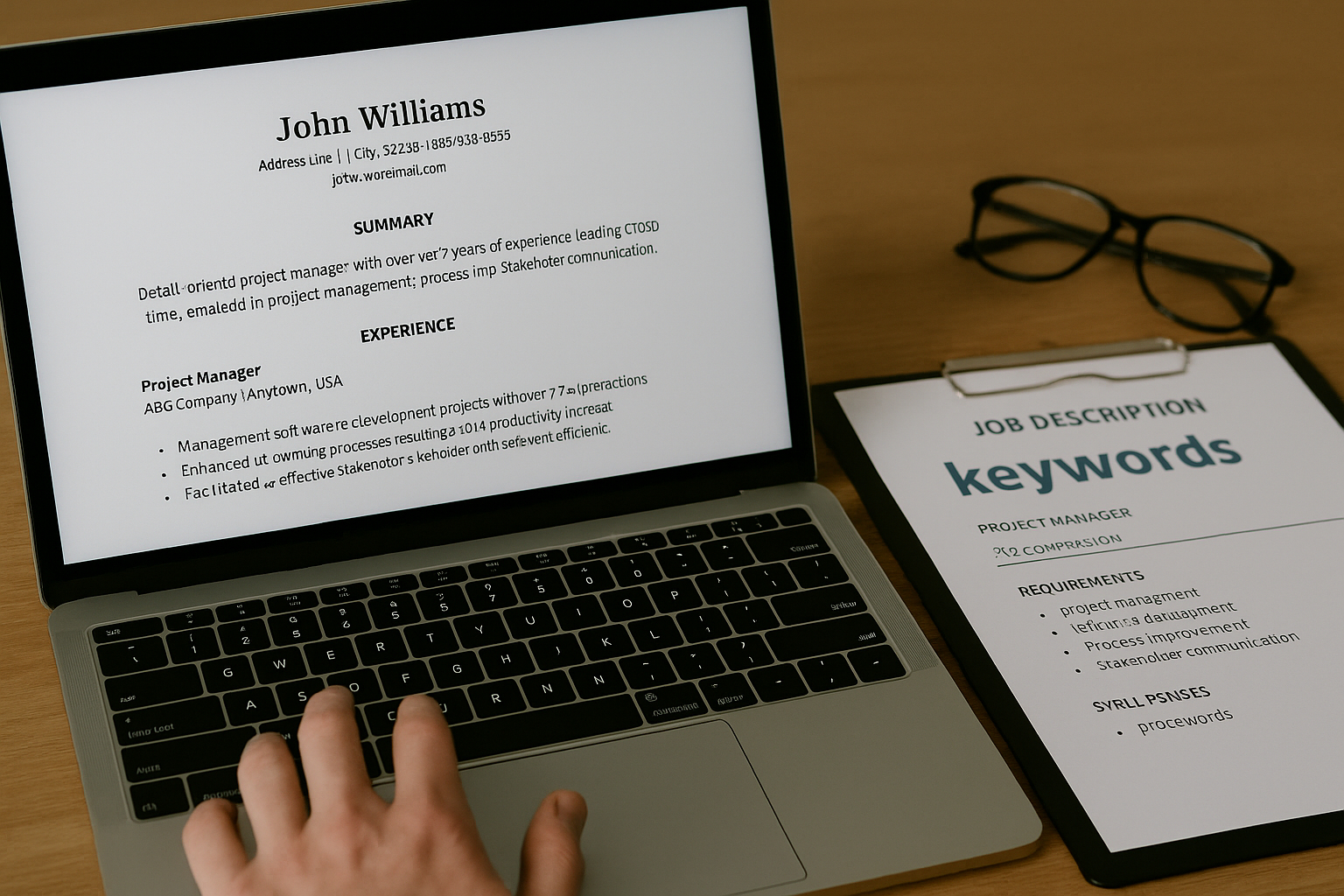
In today’s competitive job market, applicant tracking systems (ATS) play a crucial role in screening resumes before they ever reach a human recruiter. These systems scan applications for specific keywords tied to the job description, making keyword optimization an essential part of a successful job search. Without the right terms in your resume, even highly qualified candidates may be overlooked. Understanding how ATS filters work—and how to tailor your resume strategically—can dramatically improve your chances of standing out and landing more interviews.
Understanding How ATS Systems Read Your Resume
ATS platforms analyze resumes by identifying keywords that match the employer’s requirements. These may include technical skills, soft skills, job titles, tools, certifications, or industry-specific terms. If your resume lacks these keywords, the system may classify your application as a poor match, even when your experience fits the role perfectly. Knowing this, the goal isn’t to stuff your resume with random keywords—it’s to align your language with the employer’s expectations in a natural, meaningful way.
Matching Your Resume to Each Job Description
The most effective way to optimize your resume is to tailor it to each job posting. Start by reviewing the description and highlighting repeated or emphasized keywords. These often appear in the responsibilities, qualifications, or required skills sections. Incorporate these keywords naturally into your experience, accomplishments, and summary. This alignment signals to the ATS—and the hiring manager—that you understand the role and have relevant experience.
Using Keywords in the Right Sections
Placement matters. Keywords should appear in multiple parts of your resume, including your professional summary, skills list, and job experience bullets. Embedding them within real achievements is most effective, as it shows you’ve actually applied those skills. For example, instead of listing “project management,” you might write, “Led cross-functional project management initiatives that improved workflow efficiency.” This approach boosts both ATS recognition and human readability.
Avoiding Keyword Stuffing and Formatting Mistakes
Overloading your resume with repeated keywords may cause ATS confusion and reduce clarity for recruiters. Aim for balance—your resume should read naturally while still reflecting the employer’s needs. Additionally, avoid complex design elements like tables, columns, or graphics, as they can disrupt how ATS systems read your resume. A clean, text-based format improves both compatibility and clarity.
Conclusion
Keyword optimization is a powerful technique that helps your resume stand out in ATS-filtered hiring processes. By aligning your language with the job description, placing keywords strategically, and keeping your formatting simple, you increase your chances of reaching the next stage. With thoughtful adjustments, your resume becomes both ATS-friendly and compelling to recruiters—unlocking more opportunities along your career path.