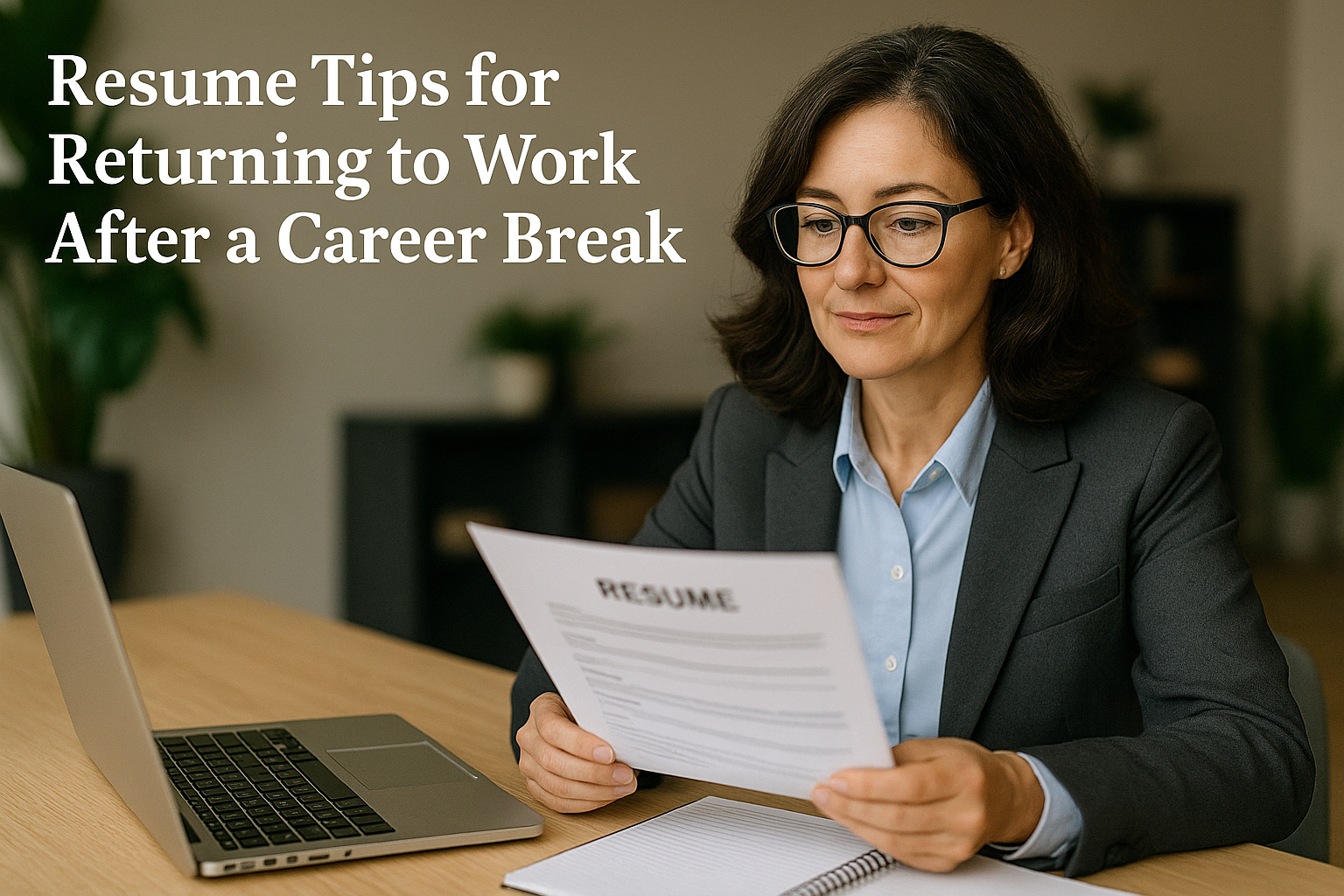
Returning to work after a career break can feel intimidating, but a strong resume can help you reenter the job market with confidence. Whether your break was for caregiving, education, travel, or personal reasons, employers today understand that career paths are no longer linear. By presenting your experience clearly and strategically, you can show hiring managers the value you bring and position yourself for exciting new opportunities.
Highlighting Relevant Skills and Recent Learning
Even during a career break, you may have developed valuable skills through volunteering, freelancing, coursework, or personal projects. Include these experiences in a dedicated section or under professional experience when they directly relate to the role you’re pursuing. Employers appreciate candidates who remain proactive and committed to growth, especially when they show recent learning that aligns with industry needs.
Using a Functional or Hybrid Resume Format
If your break created a large employment gap, a functional or hybrid resume format may work better than a traditional chronological layout. These formats emphasize skills, accomplishments, and capabilities rather than dates. By organizing your resume around strengths—such as project management, communication, or technical abilities—you can shift the focus from the gap to your qualifications.
Addressing the Career Break Positively
A brief, confident explanation of your break can help reassure employers. Whether you stepped away to raise children, care for a family member, pursue personal development, or manage health matters, frame it in a positive light. A simple statement in your summary or experience section is sufficient—no need for long explanations. Emphasize how the break contributed to your perspective, resilience, or skills.
Showcasing Measurable Achievements
Whenever possible, include metrics to demonstrate your impact in previous roles. Numbers make your contributions tangible—such as improving processes, increasing revenue, reducing costs, or managing teams. Even during a break, if you completed certifications, organized community projects, or launched small initiatives, highlight results that reflect your capabilities.
Updating Technology and Industry Knowledge
Employers value candidates who stay current. List any updated certifications, workshops, or online courses related to your field. Highlight your familiarity with modern tools, platforms, or industry trends. Showing that you’re up to date signals readiness and adaptability—qualities that matter greatly when returning to the workforce.
Conclusion
A career break doesn’t diminish your professional value—it simply adds another chapter to your story. By focusing on skills, showcasing achievements, and presenting your experience strategically, you can create a resume that positions you confidently for your next opportunity. With the right approach, your return to work can be a powerful new beginning.