







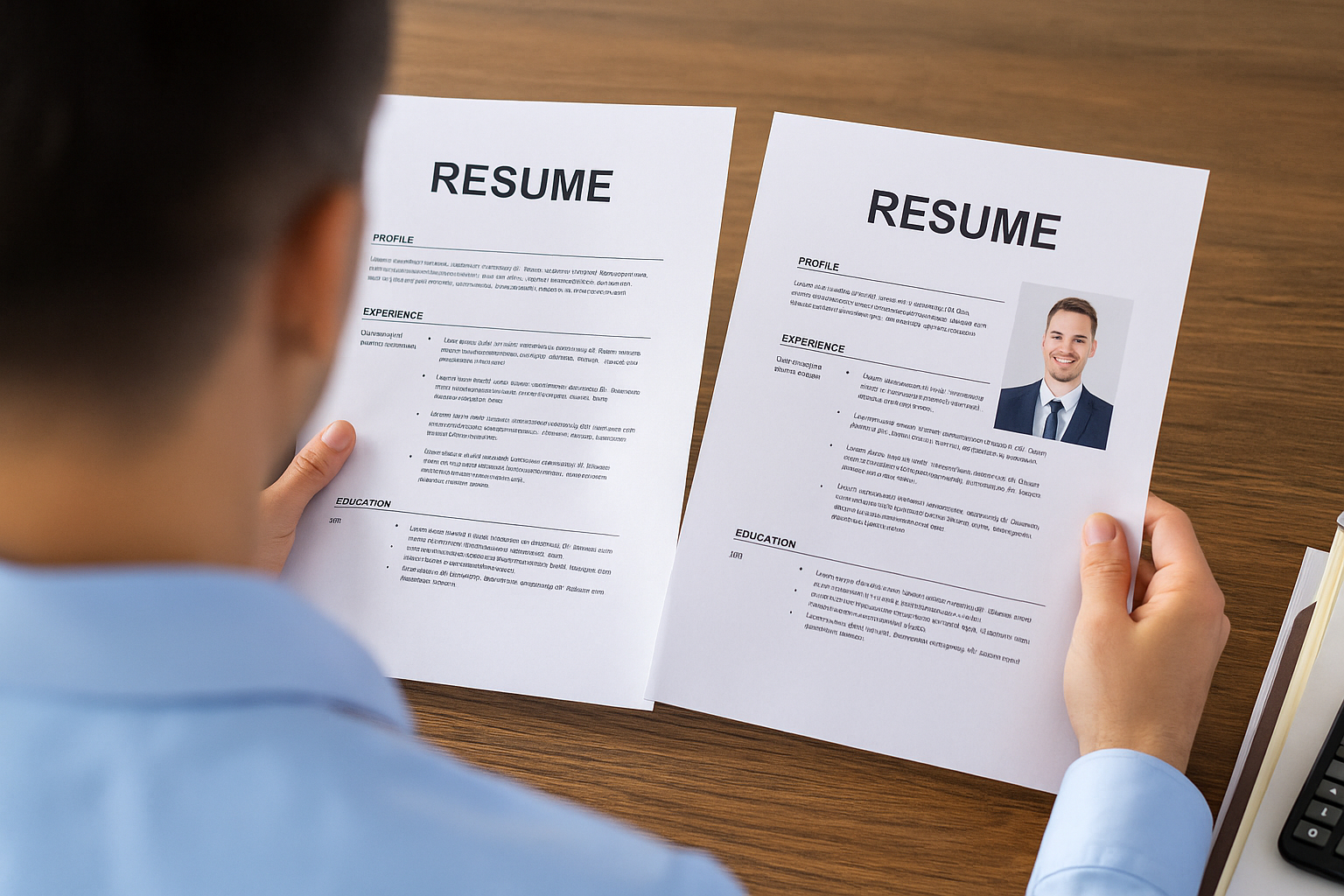
When crafting your resume, one common question arises: should you include a photo? While adding a headshot might seem like a way to stand out, it comes with both advantages and drawbacks. The right choice often depends on your industry, location, and personal preference.
Pros of Including a Photo
-
Personal Branding – A professional photo can make your resume feel more personal and memorable, especially in creative fields like design, media, or marketing.
-
Instant Connection – A friendly, polished image can create a positive first impression before the hiring manager even reads your qualifications.
-
Common in Certain Regions – In some countries, resume photos are often expected and standard practice.
Cons of Including a Photo
-
Risk of Bias – A photo may expose you to unconscious bias based on age, gender, race, or appearance, which can impact hiring decisions unfairly.
-
ATS Compatibility – Many companies use Applicant Tracking Systems (ATS), and photos may confuse the system or even cause your resume to be rejected.
-
Not Standard in Some Regions – In some regions, including photos is discouraged due to anti-discrimination laws. Employers often prefer resumes without them.
Best Practices
-
If you’re applying in a country or industry where photos are common, make sure yours is professional—clear, high-quality, and appropriate.
-
If not, focus on strong content instead: clear achievements, quantifiable results, and tailored skills will make your resume stand out more than a picture.
Conclusion
Including a photo on your resume can either boost your personal brand or create unnecessary risks. Research your target industry and location before deciding. When in doubt, skip the photo and let your skills and accomplishments speak for themselves.
