

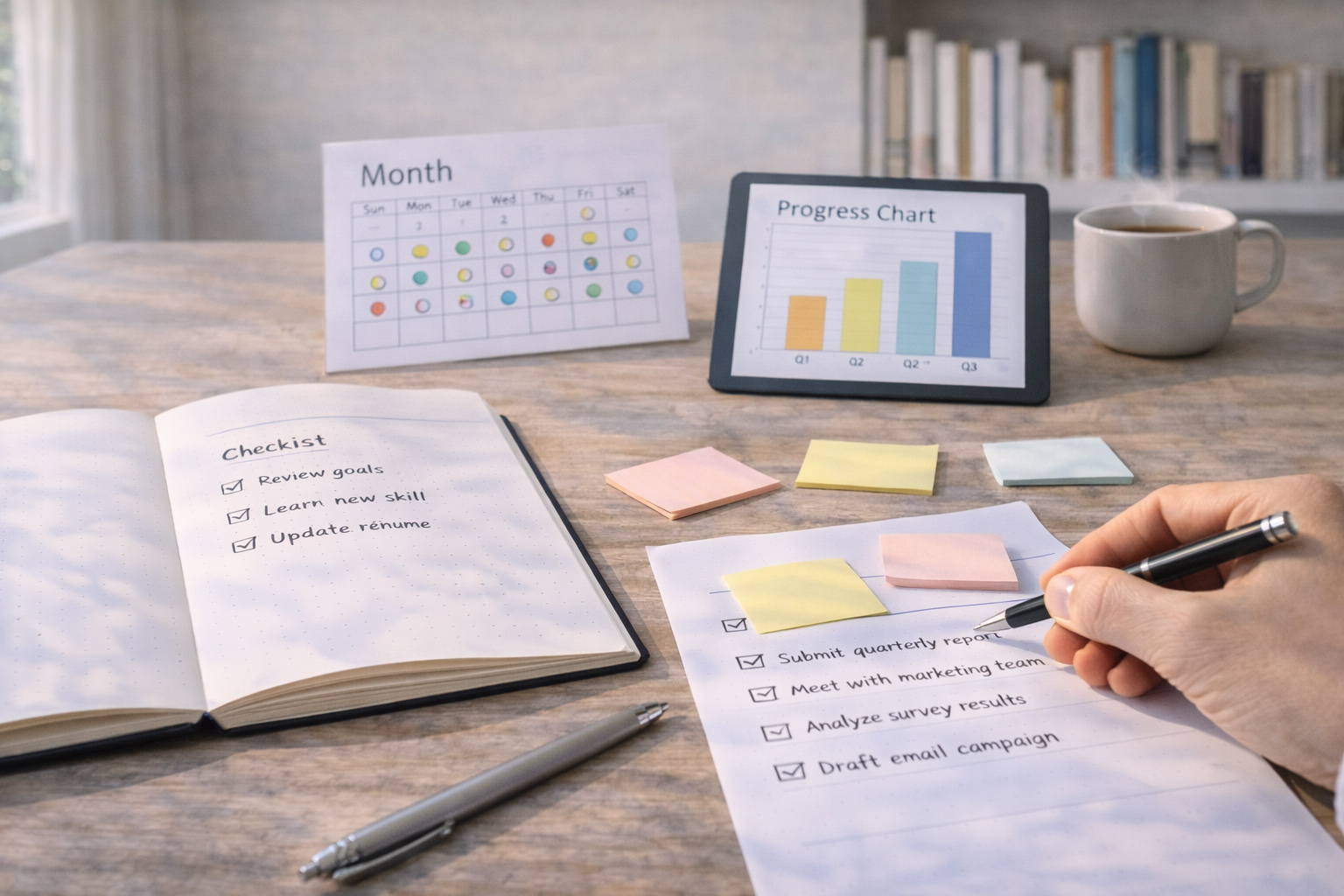
Career progress rarely arrives as a single leap; it grows through repeated actions organized into systems. Focusing on small, sustainable practices reduces friction and makes improvement manageable. When those practices are aligned with clear goals, they compound into meaningful advancement over time. This article outlines practical ways to design and maintain systems that support steady career growth.
Define Small, Meaningful Habits
Start by identifying a handful of habits that directly support your professional priorities and are realistically manageable daily or weekly. A useful habit is specific, measurable, and tied to an outcome such as improving a skill, expanding your network, or producing a portfolio piece. Keep the initial effort low to ensure consistency, then scale the habit once it becomes automatic. Avoid overloading your routine; the power comes from repetition, not volume.
Choose two to three habits that feel easy to sustain and pair them with triggers in your current routine. Over time, these small actions become building blocks that support larger projects and opportunities.
Design Repeatable Workflows
Transform habits into workflows by mapping the steps needed to complete a regular task from start to finish. Clear, repeatable workflows minimize decision fatigue and allow you to focus energy on execution rather than planning. Documenting those steps also makes it easier to delegate aspects of your work or iterate on the process. A well-structured workflow creates predictable progress and smoother handoffs when teamwork or tools change.
- Outline tasks as checklists to reduce uncertainty.
- Automate routine actions where possible to save time.
- Review your workflow monthly to remove friction.
Over time, these workflows free cognitive space for strategic thinking while ensuring steady production and visible outcomes.
Measure Progress Without Burnout
To know whether a system is working, track indicators that reflect meaningful change rather than vanity metrics. Choose a few leading indicators like completed projects, skills practiced, or meaningful conversations initiated, and check them regularly. Regular reviews should be short and constructive: identify what’s working, what isn’t, and one adjustment to try next. Celebrate small wins to maintain motivation and avoid equating busyness with progress.
Adjust metrics as priorities shift so your tracking remains relevant. Consistent, honest measurement keeps momentum aligned with long-term goals.
Conclusion
Building career momentum is about designing small systems you can maintain for years. Focus on tiny habits, repeatable workflows, and simple measures of progress to compound results. With patience and consistency, those systems lead to substantial professional growth.
