





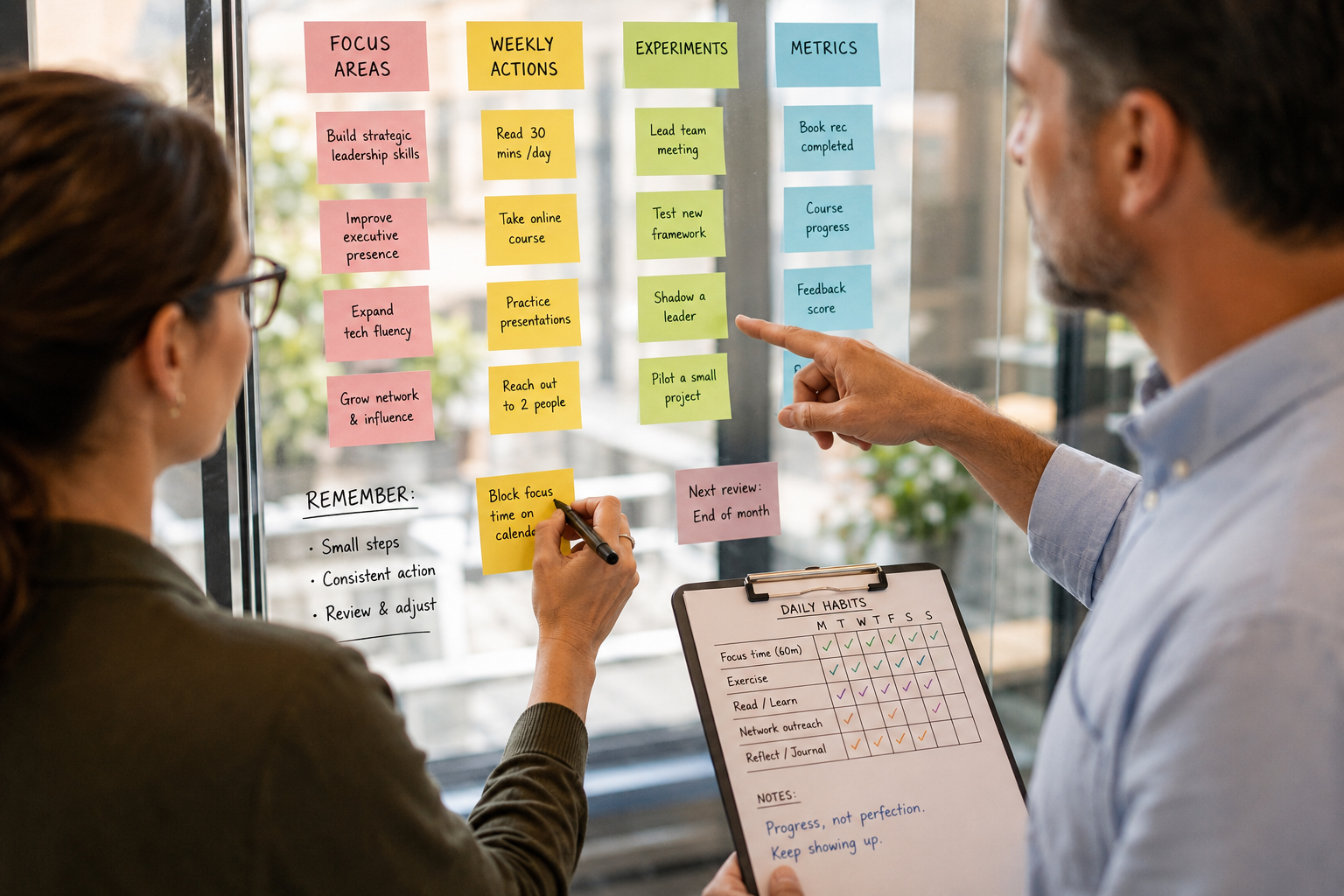
Advancing your career often feels like a series of big, infrequent decisions, but steady progress usually comes from repeated, well-chosen actions. A habit-based framework turns abstract goals into daily behaviors that compound over time. By focusing on small, consistent routines you create momentum, gain clarity, and reduce decision fatigue. This approach helps you prioritize skills and relationships that matter most for long-term growth.
Why a Habit-Based Framework Works
A habit-based framework leverages repetition to move outcomes out of willpower and into systems. When behaviors become automatic, cognitive bandwidth frees up for strategic thinking and creative problem solving. This reduces the emotional cost of change and makes progress predictable instead of sporadic. Over months and years, small actions accumulate into meaningful capability and reputation.
Implementing such a framework also supports resilience during transitions. Routines provide continuity when roles shift and help you adapt incrementally rather than overhauling everything at once.
Identify High-Impact Behaviors
Start by mapping moments of your week to desired outcomes and identify which small behaviors influence those outcomes most. Focus on activities with disproportionate returns, such as targeted learning, networking touchpoints, or project ownership. Limit your list to two or three habits to avoid overwhelm and increase adherence. Clarity about impact lets you choose habits that align with both short-term performance and long-term goals.
- Daily micro-learning: 20–30 minutes on core skill development.
- Weekly outreach: one meaningful conversation with a peer or mentor.
- Project review: brief reflection after major tasks to capture lessons.
These behaviors are simple to track and integrate into existing workflows, which improves the likelihood they will stick.
Turn Behaviors into Reliable Habits
Use environmental design and schedule anchoring to make desired behaviors easier to perform. Attach a new habit to an existing routine, set specific triggers, and reduce friction by preparing tools and time in advance. Track adherence with a minimal system—checklists, a calendar block, or a few lines in a notebook—to maintain visibility. Reinforce progress with small rewards that make the work feel sustainable.
Consistency beats intensity: modest daily effort sustained over months is more effective than occasional bursts of high energy. Keep expectations realistic and iterate when necessary.
Measure, Reflect, and Adapt
Regular reflection ensures habits remain aligned with evolving goals and context. Schedule short monthly reviews to assess what’s working, adjust targets, and retire habits that no longer serve your priorities. Use simple metrics tied to behavior and outcome—time spent, conversations held, projects completed—to evaluate progress without overcomplicating the process. Honest reflection helps you learn faster and course-correct before small issues become entrenched.
Adaptation is part of the framework; treat habits as hypotheses and refine them based on evidence. This keeps the system flexible and growth-focused.
Conclusion
Adopting a habit-based framework turns vague ambition into repeatable actions that compound over time. Small, high-impact behaviors reduce friction and create durable momentum in your career. With consistent measurement and adaptation, this approach supports steady advancement without burnout.
