



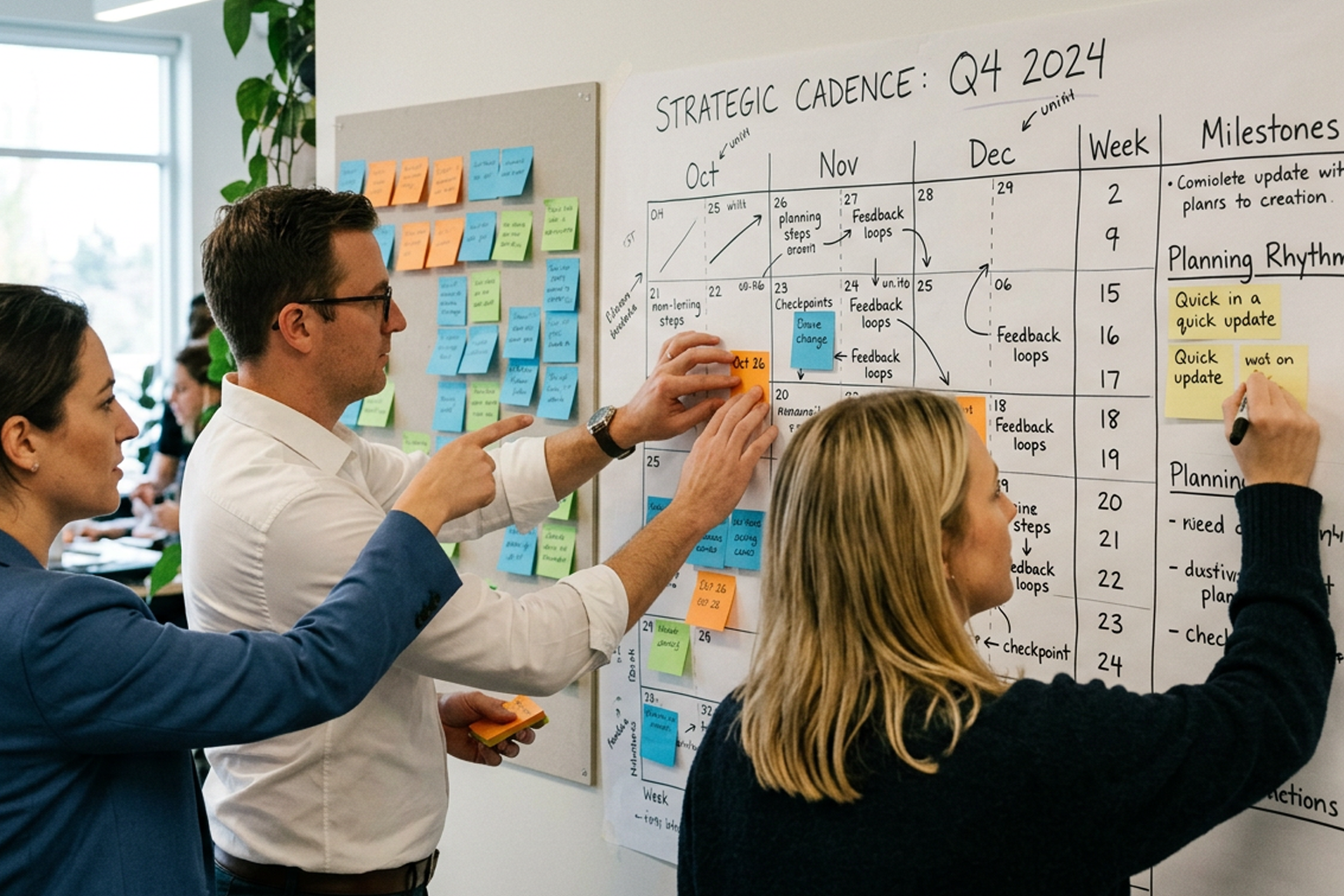
Establishing a clear, purposeful cadence helps teams make better, faster decisions without adding bureaucracy. Small, intentional rhythms reduce friction, align priorities, and build predictable habits. Managers who design cadence around outcomes preserve momentum while keeping flexibility. This article outlines practical steps to shape meeting patterns, decision rules, and feedback loops.
Set a Purposeful Cadence
Begin by auditing current touchpoints and asking what each is meant to achieve. Not every meeting needs to be weekly; choose frequency based on the decision horizon and information flow. Document the purpose and expected outputs for recurring sessions so participants come prepared and time is respected. Clear intent turns routine gatherings into reliable decision engines.
Once purposes are defined, map them onto a simple calendar that the team can follow. Commit to periodic reviews of that cadence to ensure it still serves evolving work. Adjust frequency instead of adding layers when goals change.
Clarify Decision Criteria
Decision delays often come from unclear criteria rather than lack of will. Establish lightweight rules that specify who decides what, what information is required, and acceptable risk levels. Use templates or a short decision brief to capture those elements consistently so choices are visible and traceable. This reduces repeated debate and accelerates execution.
When criteria are explicit, team members can make aligned choices outside formal meetings. That autonomy reduces meeting load and keeps energy focused on the exceptions that truly require discussion.
Design Feedback Loops and Checkpoints
Cadence is incomplete without feedback that tests assumptions and catches misalignment early. Define short checkpoints after key decisions where outcomes are measured and learnings are captured. Keep these checkpoints lightweight: quick progress updates, a brief retrospective on what worked, and a note on what to change next. Regular, predictable feedback prevents small issues from becoming systemic problems.
Integrate these checkpoints into the same rhythm so they become habit rather than extra work. Over time, the team will rely on this loop to course-correct and to share wins more naturally.
Preserve Flexibility and Psychological Safety
A useful cadence balances structure with room for adaptation and honest conversation. Encourage team members to surface concerns and propose cadence tweaks when needed. Psychological safety ensures that adjustments are evaluated on merit and that the rhythm serves the team instead of constraining it. Leaders should model openness to change and protect time for focused work between checkpoints.
By allowing occasional exceptions and learning from them, the cadence evolves and stays relevant. That approach keeps teams resilient and engaged through shifting priorities.
Conclusion
Create a small set of purposeful rhythms. Test lightweight decision rules and checkpoints. Adapt the cadence as the team learns and priorities shift.