






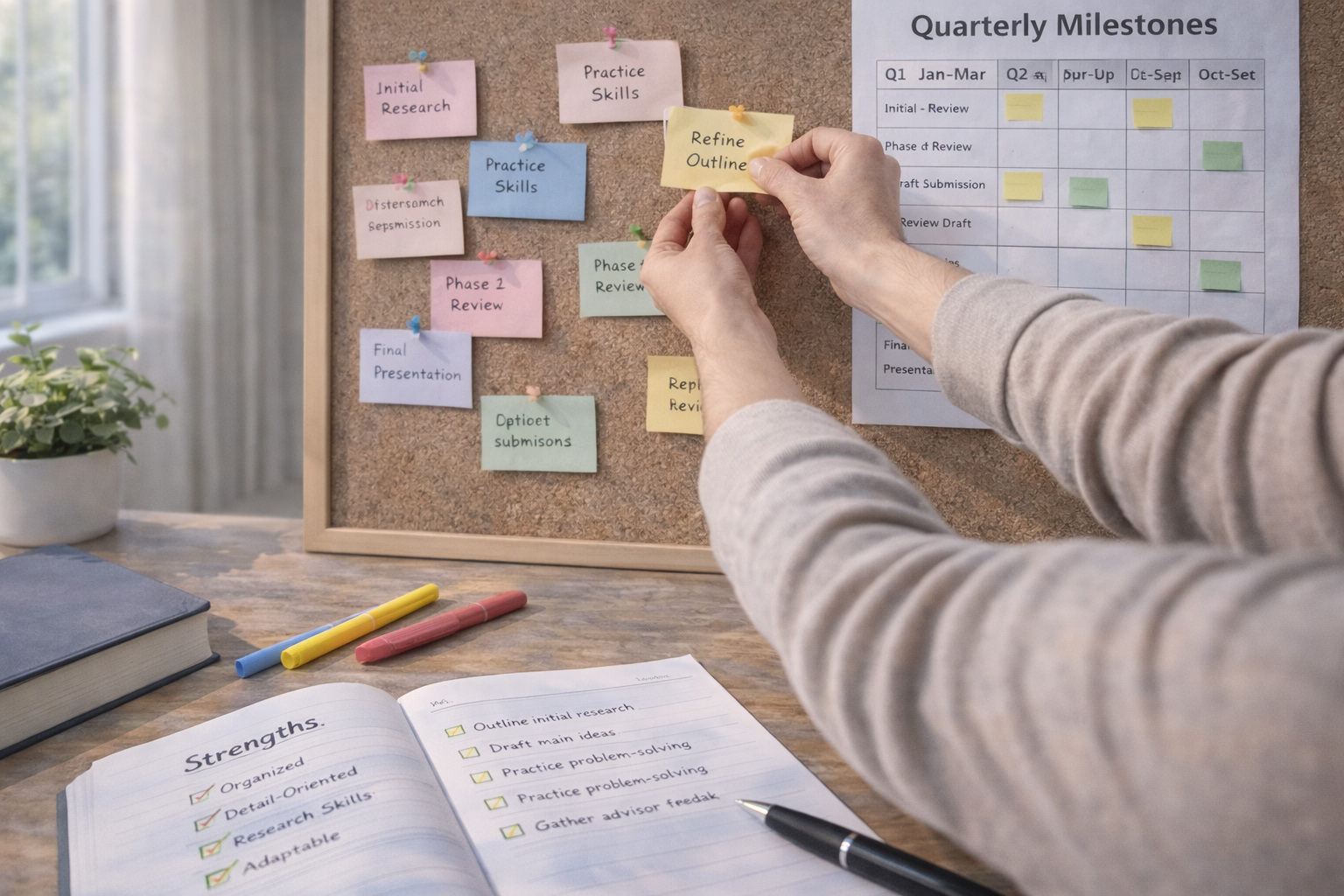
A thoughtful career roadmap helps you move from broad ideas to actionable steps. It aligns your daily choices with long-term professional goals and personal strengths. Whether you are changing fields or aiming for steady growth, clarity reduces wasted effort. This article outlines practical approaches to craft a plan that feels realistic and motivating.
Clarify your values and strengths
Begin by identifying what energizes you and what you do well, using both reflection and feedback. List tasks that feel effortless and moments at work when you felt most effective or proud. Ask colleagues, mentors, or friends for observations about your strengths; external perspective often reveals blind spots. Document these insights in a strengths-and-values statement to guide future choices. Understand which environments and team dynamics amplify your strengths to guide role selection.
With a clear strengths statement you can evaluate opportunities more quickly. Keep refining it as you grow. Update it annually and before major career choices.
Set realistic milestones and measurable goals
Break long-term ambitions into milestones that can be tracked every few months. Use specific, measurable markers like skills learned, projects completed, or roles acquired to judge progress. Schedule regular reviews to adjust timelines and celebrate small wins, which sustain momentum. Flexibility in plan and timelines prevents discouragement when unexpected opportunities or setbacks appear. Include skill checkpoints and networking targets to keep efforts aligned.
Milestones make progress visible and reduce ambiguity. Reassess goals when priorities change. Share milestones with an accountability partner for follow-through.
Build adaptable skills and professional networks
Invest in transferable skills such as communication, project management, and analytical thinking. Pursue targeted learning through short courses, volunteer projects, or cross-functional assignments. Simultaneously broaden your network by engaging with peers in adjacent fields and attending industry events. A diverse network offers insights, referrals, and potential collaborators for career pivots. Document outcomes from experiments so you can compare options over time.
- Schedule one learning activity per month.
- Set informational interviews with five contacts.
- Volunteer for a stretch assignment to test new skills.
Combine learning and networking to create momentum. Treat experiments as data, not permanent decisions. Be willing to pause initiatives that do not provide learning.
Maintain resilience and adapt to change
Career plans rarely proceed in a straight line; setbacks and detours are normal. Cultivate resilience by framing challenges as opportunities to learn rather than failures. Develop routines that support energy and focus, such as time-blocking and regular reflection. Keep an emergency plan for finances and skills to reduce anxiety when transitions occur.
Expect to revisit your roadmap after major life or market shifts. Resilience helps you persist without becoming rigid.
Conclusion
Designing a career roadmap is an iterative process grounded in self-knowledge, measurable goals, and adaptable skills. Start small, track progress, and adjust as you learn. Over time, a thoughtful plan guides decisions and increases professional satisfaction.
