






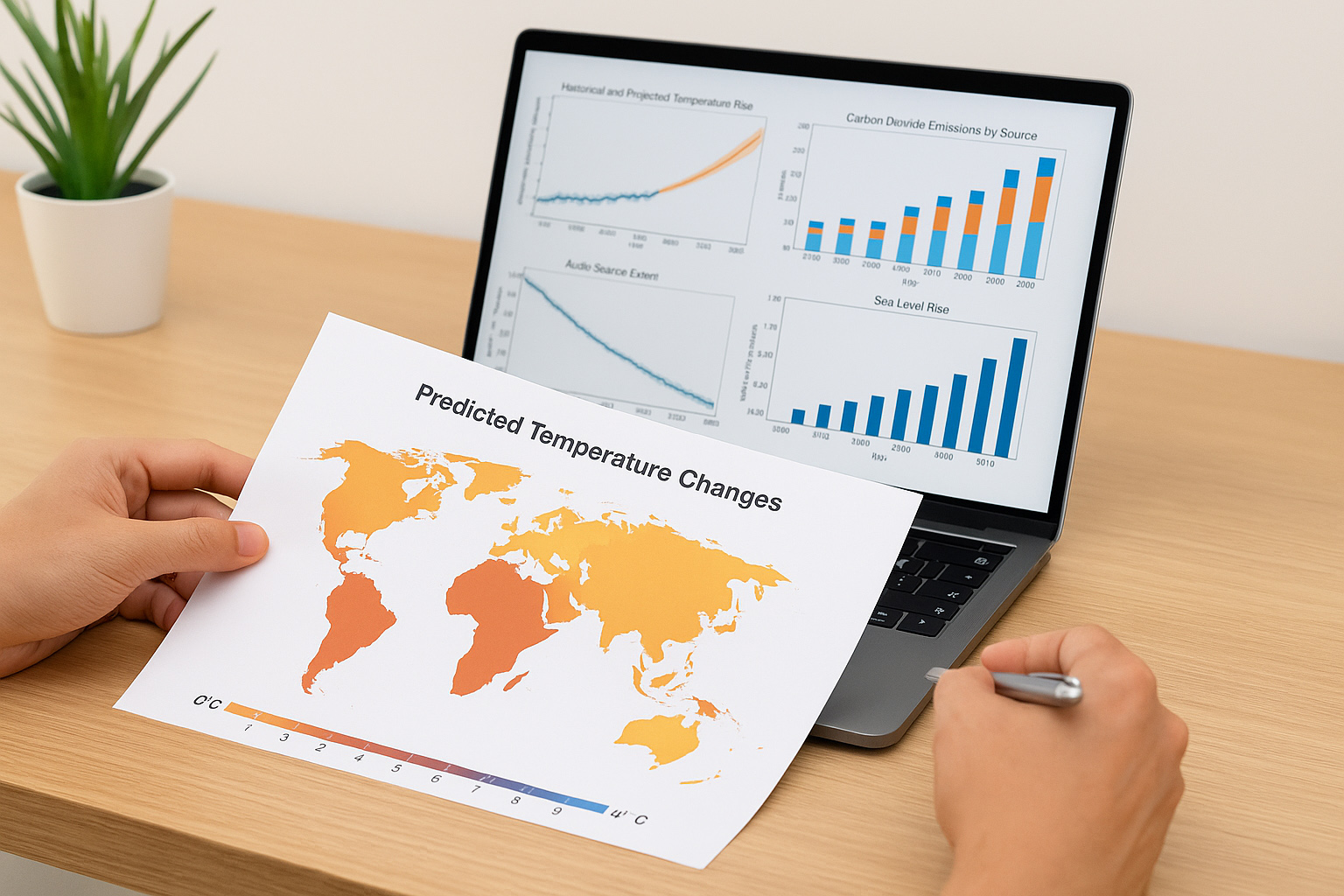
As the climate crisis deepens, one of humanity’s most powerful tools for understanding and addressing it is data. Environmental data science — the integration of statistics, artificial intelligence, and computational modeling — enables scientists to analyze massive datasets and predict how climate change will evolve. By turning complex information into actionable insights, it helps governments, industries, and communities plan for a sustainable future.
The Role of Big Data in Climate Prediction
Climate systems are highly complex, influenced by factors like ocean currents, atmospheric composition, and land use. Traditional models, while effective, struggle to process today’s enormous environmental datasets. Data science changes that. By managing satellite imagery, temperature readings, and pollution metrics, it uncovers hidden patterns that improve prediction accuracy.
Machine learning algorithms analyze decades of weather and emission data to forecast temperature shifts, drought risks, and sea-level changes with increasing precision. These insights guide policymakers in resource management, disaster preparedness, and emission control strategies.
How AI and Machine Learning Improve Forecasts
AI-powered models simulate climate behavior under different emission scenarios. Predictive algorithms assess how deforestation or industrial growth might influence rainfall or heatwaves globally. Deep learning also detects anomalies — such as unexpected glacier melt or ocean temperature surges — providing early warnings of climate tipping points.
Applications in Policy and Sustainability
Environmental data science isn’t just for scientists — it’s shaping policy, finance, and corporate sustainability. Businesses use predictive models to assess environmental risks in supply chains, while governments rely on analytics to design carbon reduction plans and allocate resources for renewable energy projects.
The Human Element in Data
Despite its sophistication, technology alone can’t solve climate change. Data-driven insights must be paired with human decision-making, ethics, and global cooperation. Transparency and inclusiveness in data collection ensure solutions serve both people and the planet.
Conclusion
Environmental data science represents a fusion of technology and ecology — transforming raw numbers into a roadmap for the planet’s future. By leveraging data to predict and mitigate climate change, humanity has a chance not just to understand Earth’s transformations, but to guide them toward sustainability.
