







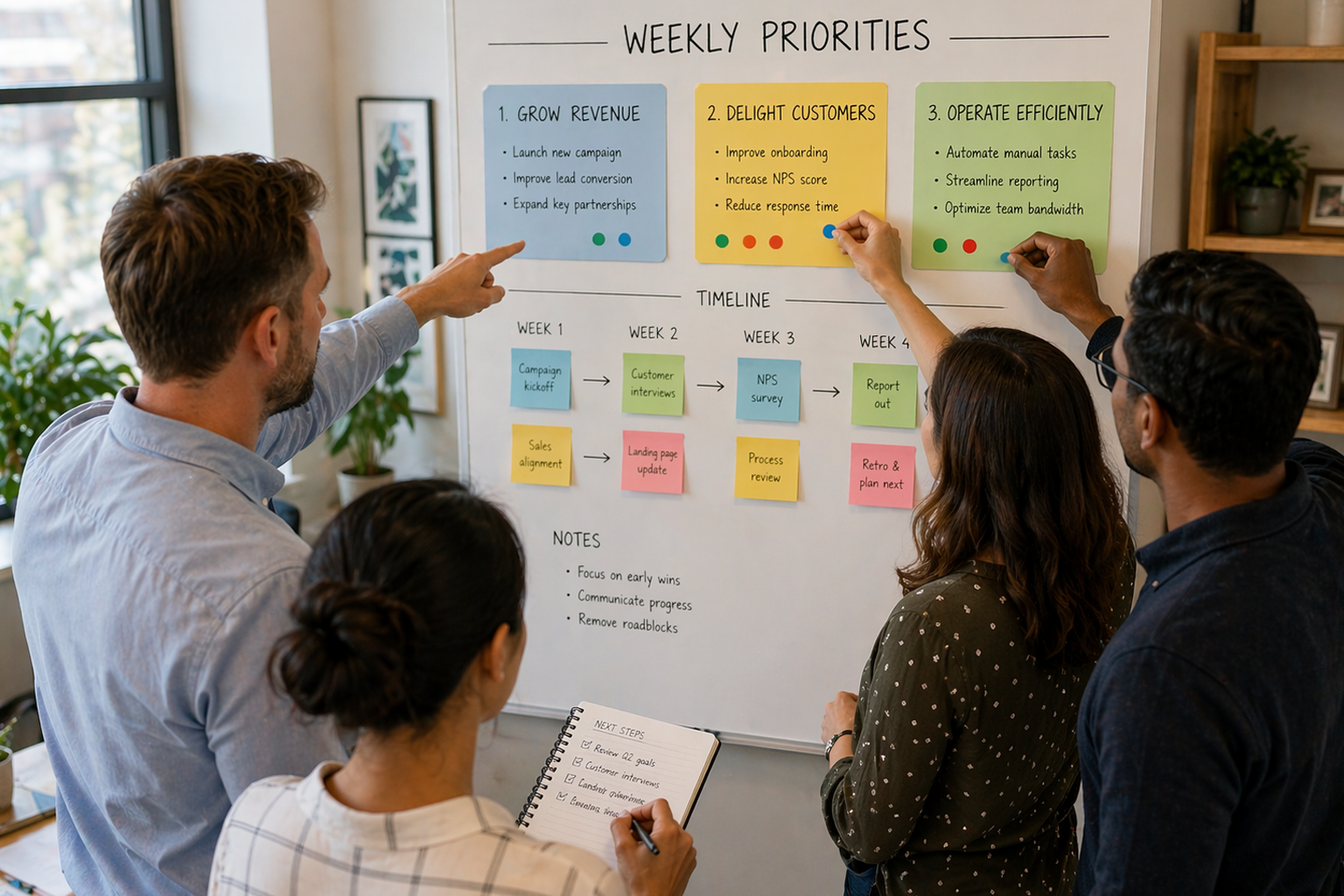
Effective managers balance long-term vision with the immediate needs of their teams. Clear, focused plans reduce wasted effort and sharpen priorities. This approach helps managers allocate time and resources where they matter most. The following sections outline practical techniques to design, communicate, and adapt focus-driven plans.
Why focus-driven planning matters
When plans emphasize a small set of priorities, teams gain clarity about expectations and outcomes. Focus-driven planning prevents the scatter that comes from chasing too many initiatives at once, improving the likelihood of completing key work. It also creates a simple framework for decision-making during busy or ambiguous moments. Managers who model this clarity help their teams maintain consistent momentum.
By narrowing focus, leaders make trade-offs explicit and protect team bandwidth. This transparency builds trust and makes it easier to defend priorities with stakeholders.
Steps to build a focus-driven plan
Start by identifying one to three measurable priorities for the planning period and connect them to a clear outcome. Break each priority into specific tasks with owners and realistic deadlines so progress is visible. Use short planning cycles to review what’s working and stop activities that don’t advance the priorities. Align weekly check-ins to these priorities so daily work ties back to measurable results.
- Define 1–3 core priorities for the period.
- Assign owners and milestones for each priority.
- Review progress weekly and adjust scope.
These steps help teams move from vague goals to concrete actions. Regular cadence and visible ownership keep accountability tight without micromanaging.
Keep plans adaptive and measurable
Focus-driven planning is not rigid; it requires feedback loops and clear metrics to stay relevant. Decide early which indicators signal success and which will trigger course corrections. Encourage brief retrospectives at the end of each cycle to surface blockers and unexpected outcomes. Use those insights to adjust priorities, timelines, or resource allocations quickly.
Adaptability ensures the team remains resilient in changing conditions. Measuring progress keeps conversations constructive and centered on outcomes rather than effort alone.
Conclusion
Adopting focus-driven planning helps managers simplify choices and align work with meaningful outcomes.Consistent short cycles, visible ownership, and measurable indicators are the backbone of this approach.When applied thoughtfully, these techniques strengthen team clarity, accountability, and results.
