


We’ve all been there—a never-ending to-do list where every task seems equally urgent. The pressure can feel overwhelming, leading to stress, poor decisions, or burnout. The truth is, not everything deserves your immediate attention. Learning to prioritize effectively helps you regain control, improve productivity, and focus on what truly matters.
1. Use the Eisenhower Matrix
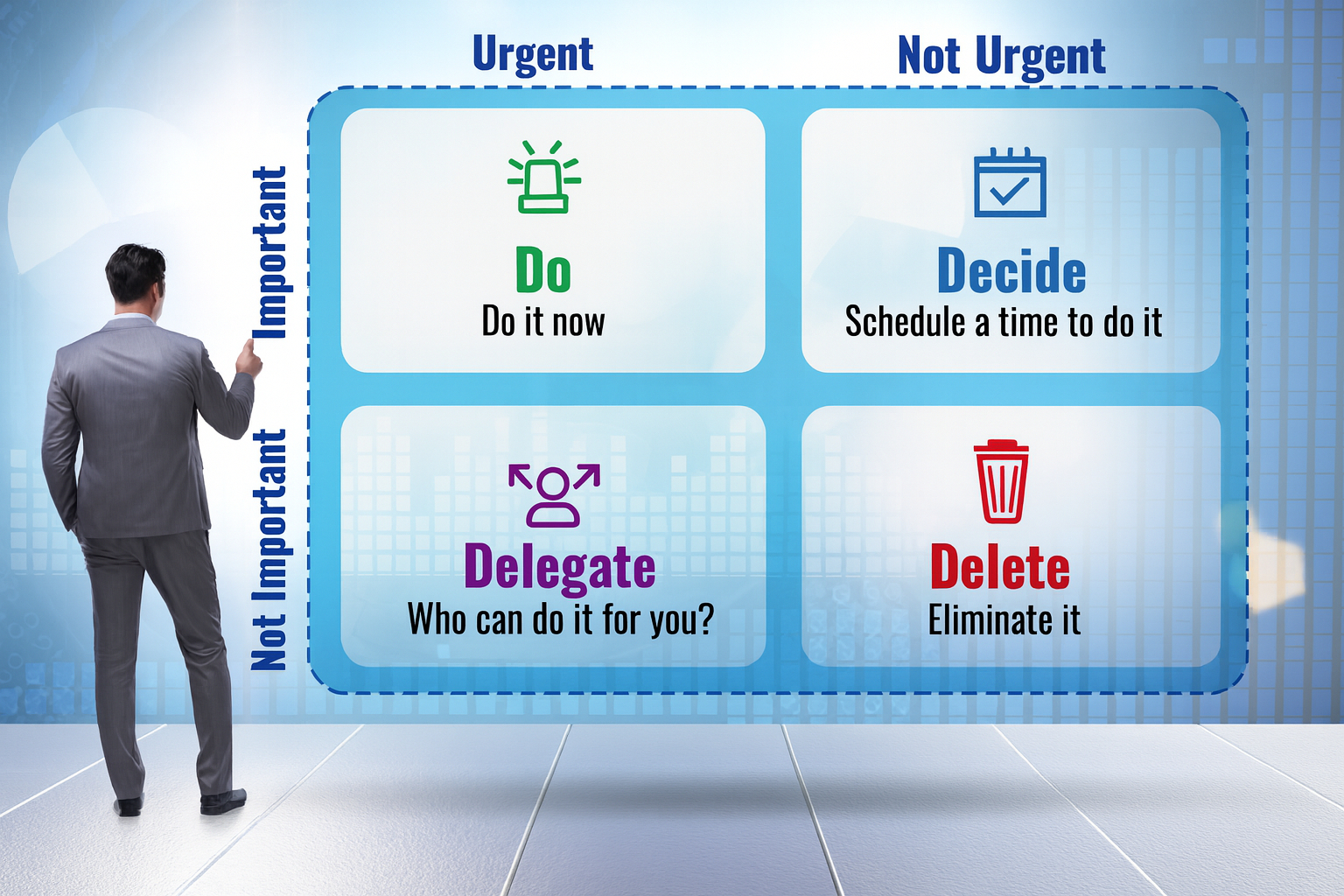
This simple tool divides tasks into four categories:
-
Urgent & Important: Do these first.
-
Important but Not Urgent: Schedule them for later.
-
Urgent but Not Important: Delegate if possible.
-
Neither: Eliminate or postpone.
This method helps separate what truly requires immediate action from what only feels urgent.
2. Apply the 80/20 Rule (Pareto Principle)
Often, 20% of your tasks create 80% of the results. Identify high-impact tasks that directly contribute to your goals and prioritize those over busywork.
3. Ask Yourself Key Questions
When stuck, ask:
-
What will happen if I don’t do this today?
-
Does this align with my long-term goals?
-
Is this urgent because of poor planning, or is it truly critical?
This reflection helps filter out false urgency.
4. Break Down Big Tasks
Large projects often feel more urgent than they are. Break them into smaller, actionable steps and set realistic deadlines. This prevents procrastination and reduces stress.
5. Time-Block Your Day
Assign specific time slots to high-priority tasks. Protect this time from interruptions and avoid multitasking. Focused work sessions lead to better outcomes than juggling multiple “urgent” items.
6. Communicate and Negotiate Priorities
If multiple stakeholders demand your attention, communicate honestly. Clarify deadlines, negotiate timelines, and align priorities with your manager or team. Transparency can ease pressure.
7. Don’t Forget Self-Care
When everything feels urgent, it’s easy to skip breaks or overwork. Ironically, this reduces efficiency. Short breaks, exercise, or even breathing exercises can recharge your focus and improve decision-making.
Final Thoughts
When everything feels urgent, the real challenge is distinguishing urgency from importance. By using prioritization tools, focusing on impact, and communicating clearly, you can take control of your workload instead of letting it control you.