







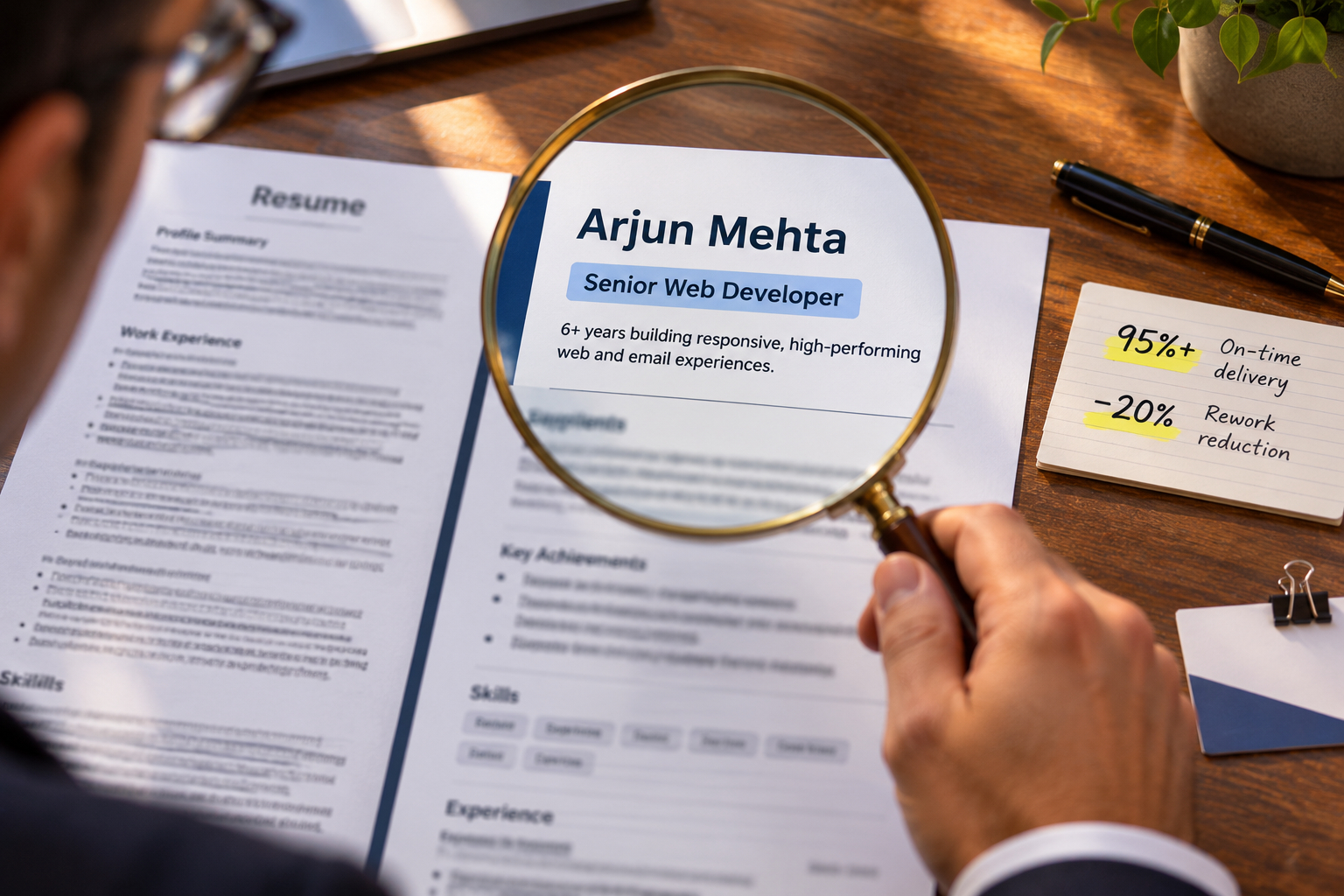
Your resume has about seven seconds to make a first impression.
Placement of your strongest items determines whether a reader keeps going.
Small layout choices — what sits at the top, what’s bolded, what’s summarized — shape that reaction.
This piece explains where to position key content so your best wins register immediately.
Lead with a clear header and purpose
The top of your resume should deliver identity and intent in a glance. Start with a clean header: name, title (or target role), and contact information. Follow with a short, specific profile or headline that states what you offer and the roles you seek. A one-line headline or two-line summary helps recruiters decide if they should keep reading.
Keep this area concise and scannable so the eye naturally drops to your strongest experience next. Avoid generic clichés; pick details that reflect measurable value.
Showcase top achievements in the experience section
Most hiring managers jump to recent experience after the header. Lead each role with a quick context line (role, company, dates) and follow with two to four bullet points that open with impact. Put your most relevant and measurable accomplishment first — the one that best matches the job you want. Quantify outcomes whenever possible to give those points weight.
- Start bullets with strong verbs and numbers where you can.
- Prioritize achievements that mirror the job description.
- Keep routine tasks short or remove them if they add clutter.
Trim older or less relevant duties into brief lines to keep the focus on wins. Recruiters should see results before a resume page ends.
Place skills, education, and extras strategically
Skills and education matter, but their position depends on your profile. If technical skills are central to the role, place a concise skills list near the top; otherwise, place education lower. Certifications, awards, or side projects belong where they reinforce your story — pull the most compelling items forward.
When in doubt, ask which section best supports the job target and move that up. For career changers, lead with transferable achievements and a skills snapshot. The goal is a logical flow from headline to proof.
Conclusion
Positioning is persuasion: place the strongest evidence of fit where readers look first.
Make the top of the page work hard for you, then guide readers through compact, quantified examples.
A neat, prioritized resume invites a second look.
