



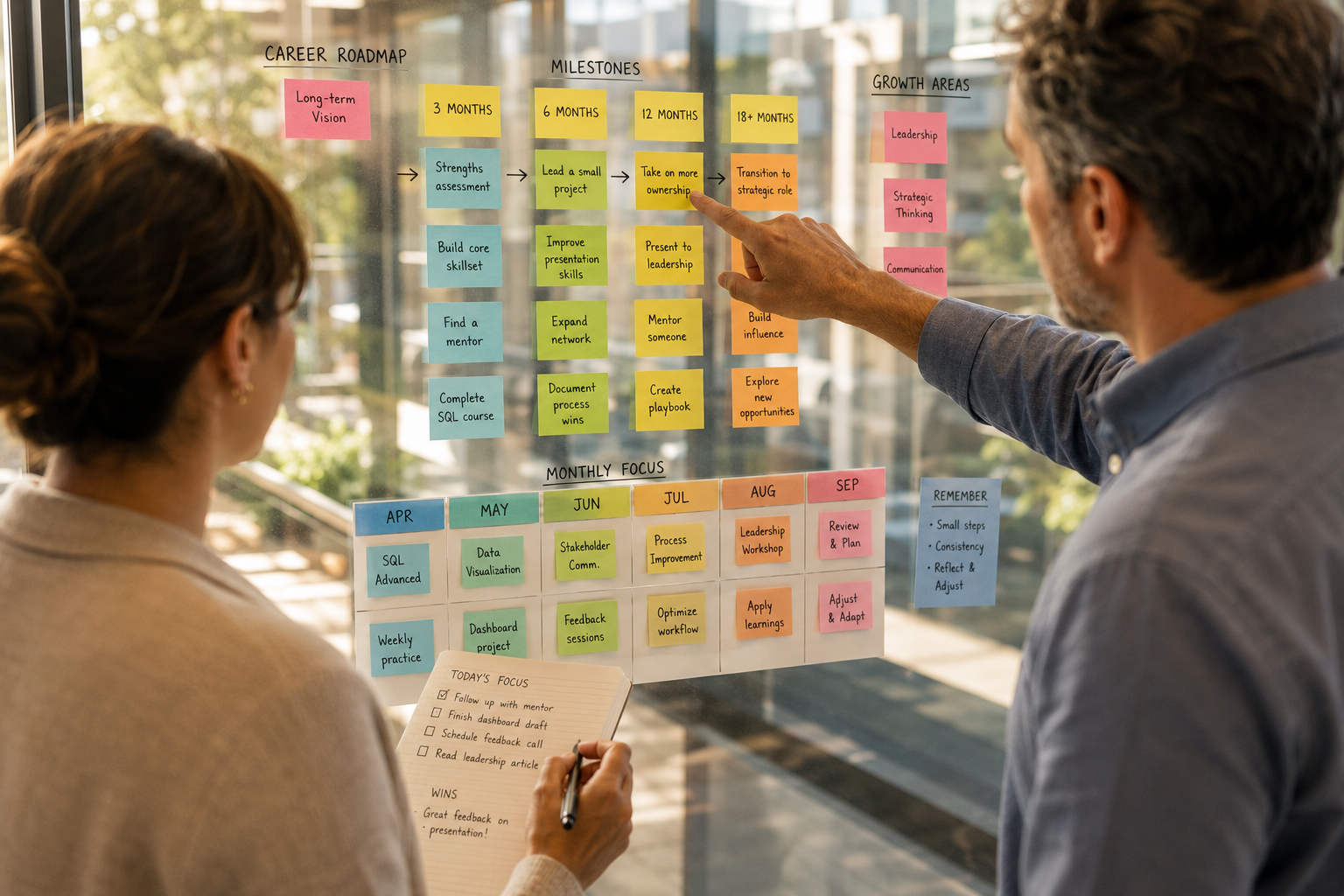
Career growth benefits from a flexible, practical strategy rather than rigid plans. This approach focuses on small, repeatable actions that compound into meaningful progress over time. It emphasizes clarity about outcomes, deliberate skill-building, and regular reflection to adapt when circumstances change. In this article I outline a simple framework to help you design an evolving career plan. The framework below emphasizes practical habits you can apply this week.
Clarify Outcomes and Directional Priorities
Start by naming a handful of long-term outcomes that matter most to you professionally. These might include the types of roles you enjoy, the skills you want to own, and the impact you want to deliver. Limit yourself to three to five directional priorities so decisions become simpler and progress becomes measurable. Write these outcomes down and revisit them when evaluating opportunities or reallocating time.
With clear outcomes you can prioritize work and learning that accelerates toward those ends. This clarity reduces noise and keeps effort aligned with your longer-term direction.
Build Layered Skills and Tactical Milestones
Break desired skills into layered components that start with fundamentals and progress to specialization. Define short-term milestones tied to each layer, such as completing a project, earning a certificate, or mentoring a colleague. Small, frequent wins build confidence while keeping long-term skill accumulation manageable. Track progress with simple metrics so you can celebrate movement and adjust timelines when needed.
Use a calendar and task system to protect time for focused practice and experiments. Over months these disciplined steps compound into capability that opens new options. Revisit milestones quarterly to keep effort aligned.
Create Feedback Loops and Iterate Often
Regular feedback shortens the learning cycle and prevents long detours from your goals. Schedule quarterly reviews and weekly reflections to surface what’s working and what needs change. Seek input from peers, managers, mentors, and objective data such as project outcomes or performance metrics. Use that information to prune activities that don’t produce value and to double down on effective experiments.
Iteration keeps your plan responsive to new opportunities and changing priorities. Treat career planning as ongoing product management: experiment, measure, learn, and repeat.
Conclusion
An evolving career strategy balances clear outcomes with adaptive execution and regular learning. By clarifying priorities, building skills in layers, and using feedback, you create upward momentum. Start small, measure progress, and adjust deliberately to keep development sustainable over time.