






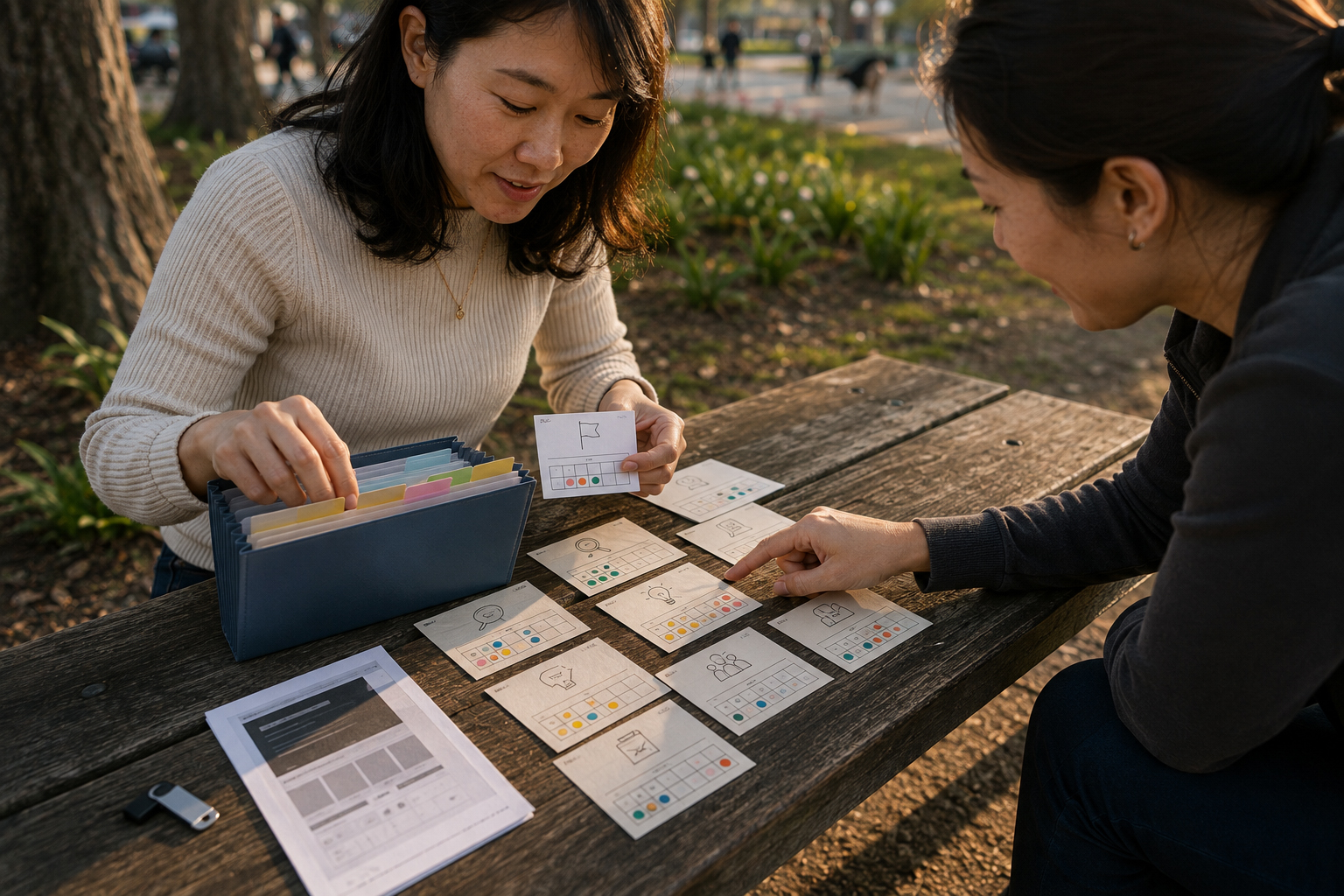
Choosing a next step doesn’t require a grand master plan. Small experiments give you quick signals without risking everything. They also help you learn what fits and what doesn’t in real situations. This approach keeps momentum while you test ideas and build confidence.
Start with tiny, time-bound tests
Pick a question you can answer in two weeks, then design one experiment to test it. Use low-cost methods: volunteer, freelance, take a micro-course, or shadow someone to see the work in practice. Frame a clear success metric—what will count as useful evidence at the end of the test. Allocate a small, dedicated time block each day so the experiment progresses without overwhelming your schedule. Treat results as information, not a final verdict; patterns over several experiments are the real signal.
Log what you learn and how it felt. Repeat or pivot based on that data.
Turn learning into visible progress
Translate experiments into artifacts you can show: a project, a case study, sample work, or a short presentation. Even small pieces of work—a mockup, a two-page brief, or a recorded walkthrough—make abstract skills concrete. Use these artifacts to solicit focused feedback from peers or a mentor, which is more actionable than general praise. Tag each artifact with what you learned and what you would do differently next time to accelerate improvement. Over time, that collection becomes the clearest evidence of change and growth you can present in conversations.
Keep a single folder or page that tracks outcomes. Review it monthly to spot patterns.
Make flexibility the core of your plan
Instead of locking into a single destination, map several adjacent possibilities you can reach via small steps. Sketch what skills, contacts, and exposures each option requires, then prioritize experiments that test the riskiest assumptions. Budget time and energy for exploration so experiments don’t derail current responsibilities; balance focus with curiosity. Build decision points into your plan—dates or milestones that prompt review rather than emotional reaction. This keeps momentum moving while ensuring you don’t burn time chasing incompatible paths.
A flexible plan reduces fear and keeps options open. That makes decisions easier and progress more sustainable.
Use feedback loops to refine faster
Build short feedback loops into every test: a quick survey, a debrief with a colleague, or a metrics check. Ask precise questions—what changed, what surprised you, where did energy drain—so you get usable answers. Treat feedback as data to update your map: extend paths that show traction and shelve ones that consistently underperform. Over several cycles you’ll reduce guesswork and make decisions based on patterns rather than hunches.
Document small wins and failures equally. That record speeds better choices and keeps morale realistic.
Conclusion
Small experiments turn uncertainty into useful evidence. They let you build skills and artifacts while minimizing downside. Start tiny, track results, and adjust as you learn.
