







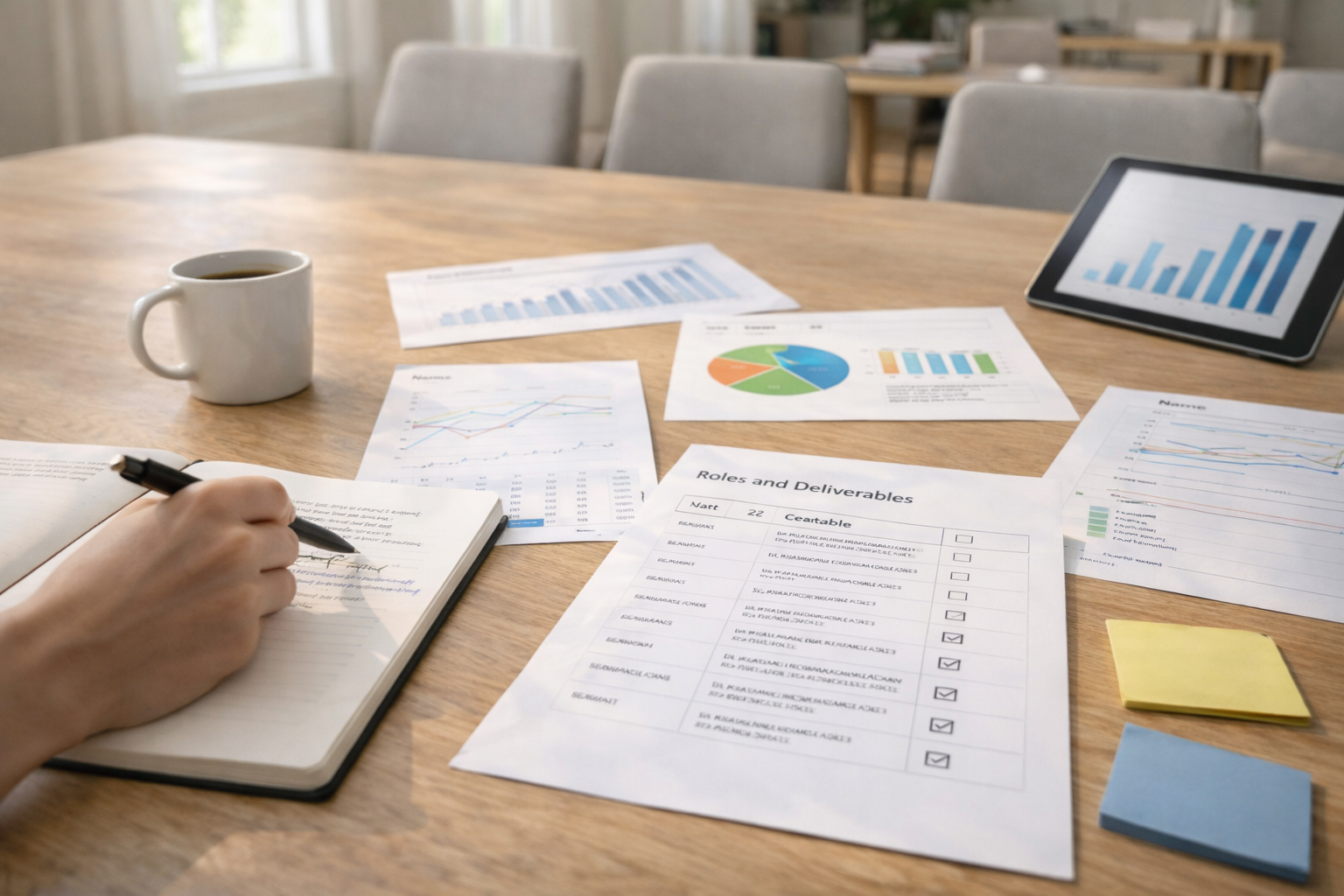
Managing team performance is a continuous discipline that balances clarity, communication, and measurement. Leaders who apply practical strategies can align individual efforts with broader objectives and maintain momentum toward goals. This article outlines approachable tactics to improve accountability, collaboration, and results without adding undue complexity. These methods suit managers at any level seeking consistent, sustainable performance improvements.
Clarify Roles and Expectations
Start by defining roles, responsibilities, and expected outcomes so every team member understands how their work contributes to team objectives. Use simple job summaries, priority lists, and agreed deliverables to remove ambiguity and reduce duplication. When expectations are documented and revisited regularly, people can focus on execution rather than guessing priorities.
- Draft clear role descriptions with measurable deliverables.
- Set short-term goals aligned with team priorities.
Reinforcing clarity during one-on-ones and team meetings keeps expectations visible and actionable. This clarity also makes it easier to recognize performance gaps and address them constructively.
Foster Transparent Communication
Effective communication builds trust and surfaces problems early, which prevents small issues from becoming crises. Encourage open feedback, regular check-ins, and an environment where questions are welcomed without judgment. Use concise updates and shared tools to keep everyone informed of progress and dependencies. Prioritize active listening so managers can respond to obstacles rather than reacting to surprises.
Transparent communication supports timely course corrections and stronger collaboration. Over time it reduces friction and increases the team’s adaptability to change.
Measure Progress and Iterate
Establish a small set of meaningful metrics that reflect outcomes rather than activity alone. Combine quantitative indicators with qualitative insights gathered from reviews and retrospective conversations. Schedule regular cadence for reviewing these measures and use findings to adjust approaches, redistribute work, or refine goals. Continuous improvement requires both data and contextual understanding to guide decisions.
Iteration keeps the team responsive and focused on value creation, not just activity. Regular reviews also create opportunities to celebrate progress and recalibrate where needed.
Support Development and Recognition
Investing in skill development and timely recognition cultivates motivation and competence across the team. Offer targeted training, stretch assignments, and regular coaching that align with both individual career paths and team needs. Recognition should be specific and tied to the behaviors and outcomes you want to see, reinforcing standards without creating resentment. When people feel supported and seen, engagement and performance typically improve.
Make development part of your routine reviews and celebrate progress publicly and privately. This combination strengthens retention and encourages continuous learning.
Conclusion
Managing performance well depends on clear expectations, open communication, and ongoing measurement. Apply these strategies consistently to create a reliable rhythm for improvement. Small, steady changes build stronger teams and better results over time.
