







Organizations that sustain momentum use small, repeatable rituals to keep teams aligned and focused. These rituals combine brief assessment, clear tasks, and timely feedback into a manageable cadence that fits busy schedules. Managers can design micro-processes that take under fifteen minutes but prevent drift and clarify responsibility across contributors. Below are practical rituals to adopt, adapt, and scale based on your team’s pace and priorities.
Regular Micro-Assessments
Start with brief micro-assessments that focus on outcomes rather than activity to reveal meaningful patterns. Use a consistent set of core questions so answers are comparable across weeks and trends are easier to interpret. Time-box assessments—five minutes per person or ten minutes for a group—to respect attention and reduce preparation overhead. Encourage concise, evidence-based notes rather than long reports to keep the process lightweight. Over time, these short checks build a continuous snapshot of priorities and blockers.
Share assessment highlights in a visible place so the team can see changes and progress at a glance. Consider a single shared document or channel to collect findings and surface trends. Make it clear which observations require action and which are for awareness to avoid unnecessary task creation.
Action Mapping and Ownership
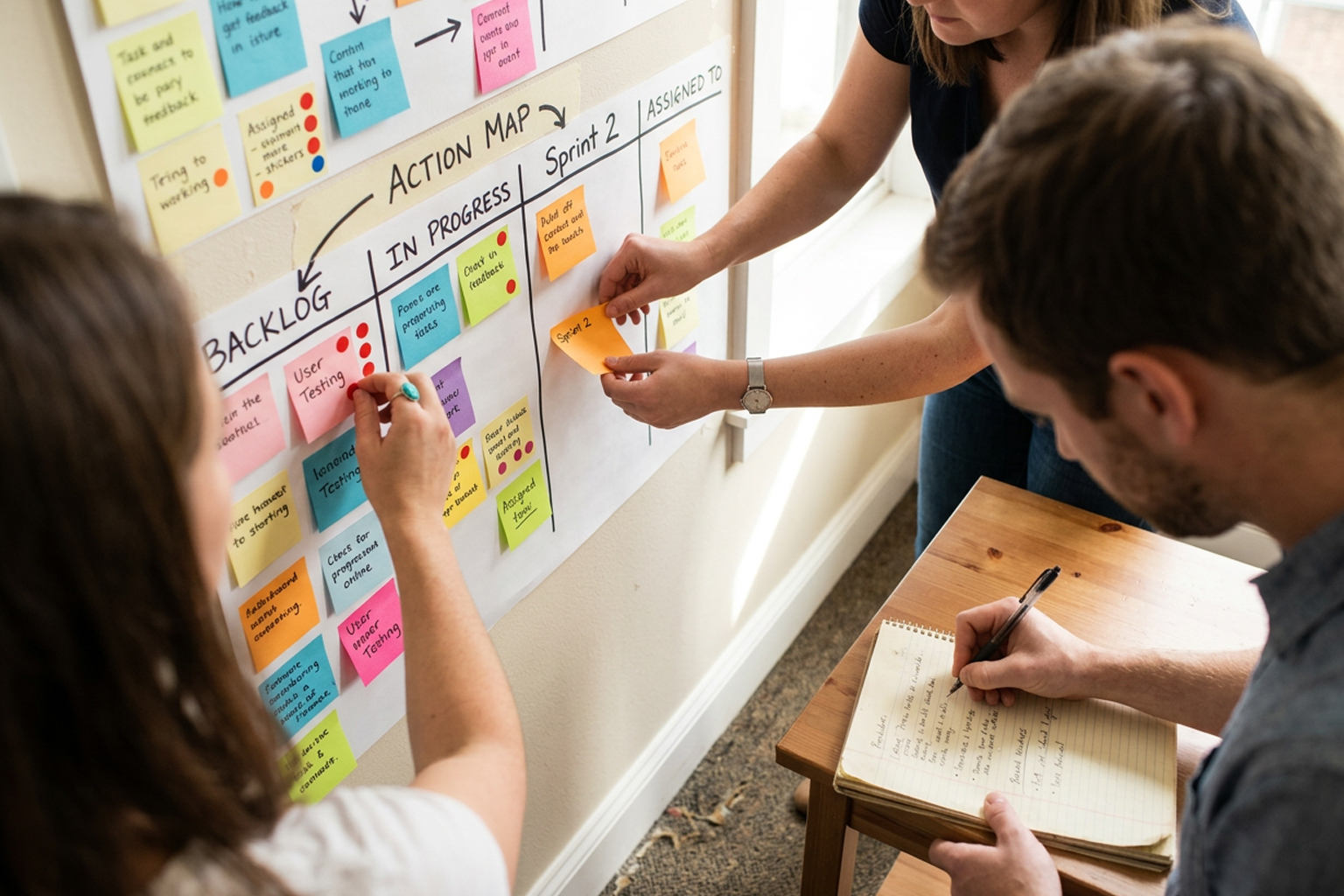
Translate assessment insights into an action map that assigns clear ownership and timelines for each item. Limit each cycle to three to five actions to preserve focus and increase the chance of completion. Define outcomes and acceptance criteria so progress is verifiable and not open to interpretation. Use short deadlines tied to the rhythm of your micro-assessments to maintain momentum. Revisit the map at each checkpoint to reassign or retire actions based on changing needs.
Confirm that owners understand both the expected outcome and the constraints, and ask for a brief confidence estimate when useful. Record small wins and adjustments to keep the team motivated. This discipline reduces ambiguity and accelerates follow-through across the group.
Fast Feedback Loops
Build fast feedback loops that are descriptive and future-focused to support continuous improvement. Encourage team members to deliver specific observations, state the impact they noticed, and suggest one practical change. Make feedback regular and informal so it becomes a learning tool rather than a high-stakes review. Keep sessions brief and action-oriented to minimize defensiveness and maximize clarity. Over time, these habits normalize course correction and skill development.
- What changed this week?
- What helped or hindered progress?
- What one action will we try next?
Capture any agreed actions in the action map and assign an owner immediately. Close the loop by checking the impact in the next micro-assessment to validate whether the change mattered. These small cycles compound into stronger team alignment and greater clarity.
Conclusion
Small, repeatable review rituals prevent drift by creating clear moments for assessment, action, and feedback. When implemented consistently, these practices help teams prioritize effectively and learn faster. Start with one ritual, keep it short, and iterate it until it fits your team’s natural rhythm.
