


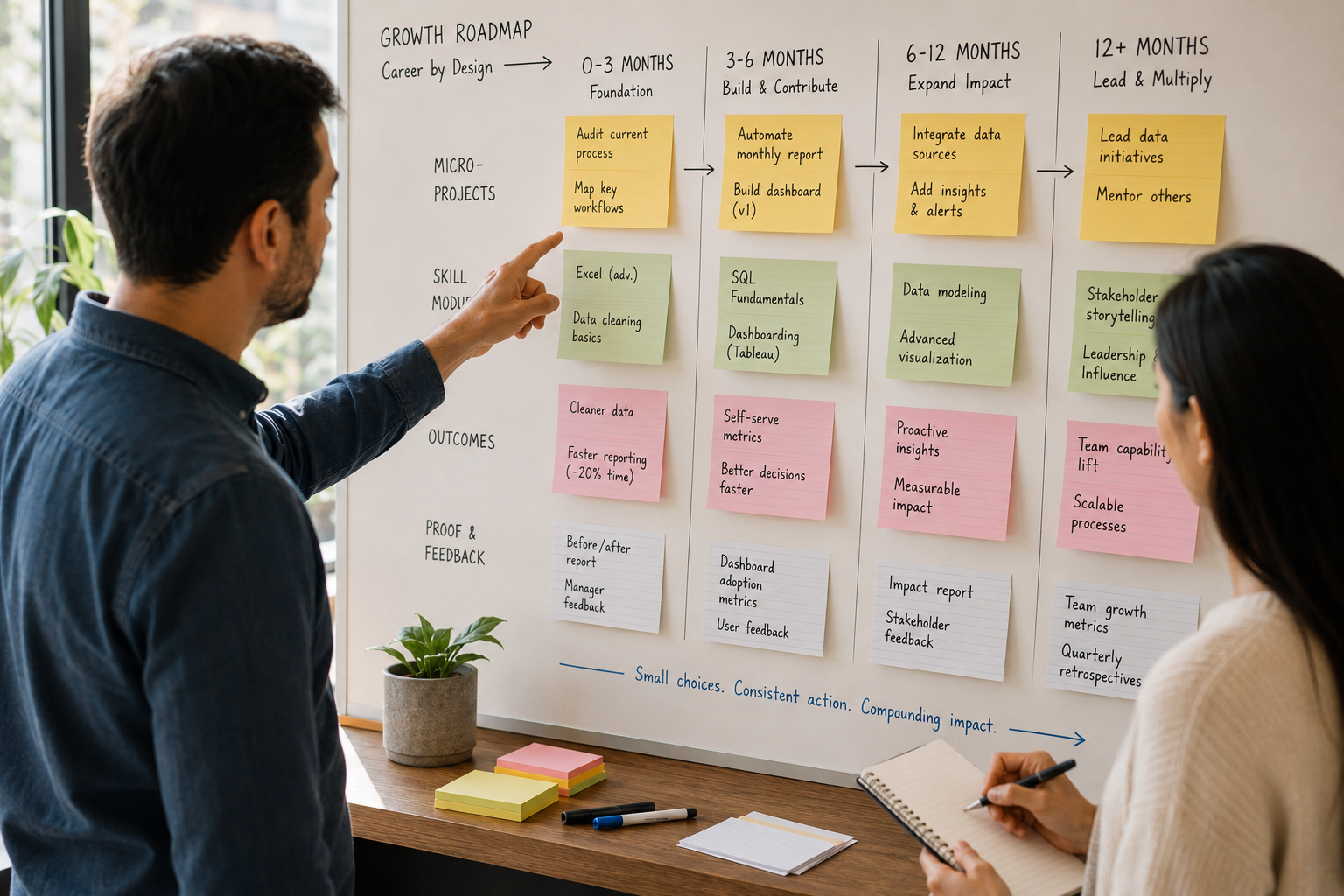
Every meaningful career evolves through a sequence of small, deliberate choices. Rather than waiting for a dramatic opportunity, consistent decisions compound into advantage over time. This article focuses on practical habits and experiments that widen options without risky leaps. You will find frameworks to assess where to invest attention, skills, and time for steady momentum. The emphasis is on repeatable practices that compound into visible progress.
These ideas prioritize adaptability and learning over rigid plans. The goal is a sustainable trajectory you can adjust as roles and markets change.
Assess Your Starting Point
Begin by mapping current strengths, gaps, and interests to create a clear baseline. List your most reliable skills and the outcomes they produce, plus learning areas that unlock new opportunities. This honest inventory helps prioritize experiments that are feasible and high-impact. Use short assessments and feedback conversations rather than exhaustive audits to move quickly.
Regular check-ins keep this baseline accurate and actionable. A current map simplifies decision-making about where to focus next. This clarity reduces decision fatigue and helps allocate time where it counts.
Build Flexible Skill Blocks
Structure development as modular skill blocks you can combine in different roles. Invest in transferable abilities—communication, structured problem-solving, and domain fundamentals—that amplify future specialization. Short, focused courses and projects are effective ways to assemble these blocks without full career rotations. Aim for T-shaped skill profiles that balance depth in one area with breadth across adjacent fields. Document outcomes so you can reuse and communicate results clearly to stakeholders.
- Create 8–12 week micro-projects to apply new skills.
- Pair learning with measurable outputs to prove competency.
Modularity keeps options open and reduces the cost of switching directions. These blocks should be reusable across roles and easy to showcase in interviews or portfolios.
Test and Iterate with Focused Experiments
Run lightweight experiments to validate assumptions about fit and value before major commitments. Examples include short freelance gigs, internal stretch assignments, or informational projects that deliver a clear result. Frame each experiment with a hypothesis, success metrics, and a fixed timeline to avoid drift. Collect feedback and refine priorities based on outcomes rather than feelings alone.
Small experiments scale learning while preserving stability in your income and responsibilities. They turn uncertainty into data for smarter long-term decisions. Over several cycles you build evidence that supports bolder role shifts when ready.
Conclusion
Small, consistent choices build a durable career trajectory more reliably than rare big bets. Keep learning modular, test ideas quickly, and revisit your map regularly to stay prepared. Over time, incremental investments create real optionality and professional momentum.