





Introduction
Small changes to your resume can produce noticeably different results when hiring managers scan dozens of profiles. Focused edits—what you lead with, which accomplishments you quantify, and how you format sections—matter more than adding fluff. This piece highlights practical, concrete adjustments you can make tonight without rewriting your whole document. Read on for targeted steps that improve clarity and relevance.
Lead with a concise headline and summary
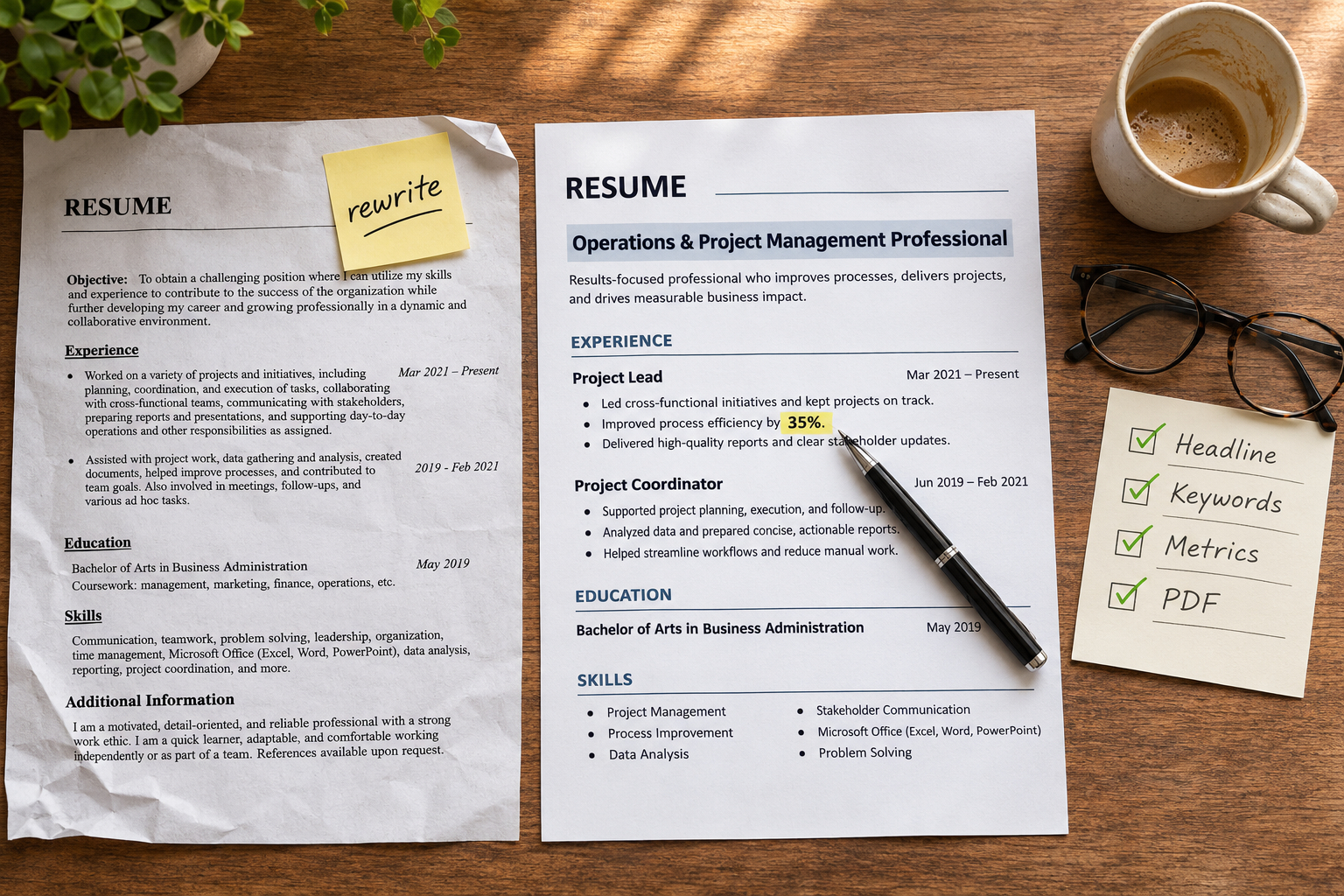
Start by replacing a vague objective with a short professional headline and a two‑line summary that targets the role you want. Use a headline that names your function and level (for example, Product Manager — Consumer Apps) and a summary sentence that lists your top two strengths. Keep it scannable: hiring managers should know in seconds why you fit. Avoid repeating the job title verbatim; instead show a quick value proposition.
These front‑loaded cues set expectations and guide the reader into your experience section. They also make tailoring easier when applying to specific roles.
Optimize for keywords and readable layout
Match keywords from the job posting but work them naturally into achievements, not a keyword dump. Choose a clean, standard font and use clear headings: Experience, Education, Skills, Certifications. Keep dates and company names aligned so an ATS and a human can parse timelines at a glance. A cluttered layout hides strengths; white space and consistent bullets reveal them.
Limit styling to bold for titles and simple bullets for duties; skip dense paragraphs. That balance helps both software screening and human readers.
Show measurable achievements, not duties
Swap generic duties for specific outcomes: revenue growth, time saved, process improvements, team size, percentages, or dollar figures. Instead of “managed campaigns,” write “launched 12 campaigns that increased lead volume 35% year over year.” Numbers provide instant credibility and give interviewers concrete talking points. If exact figures are confidential, use ranges or percentages to communicate impact.
Quantified results differentiate you from applicants who list responsibilities only. Aim for at least two measurable bullets per recent role.
Polish, proofread, and send smart file types
Proofread carefully and read aloud to catch rhythm and errors; ask a peer to scan for clarity. Name your file professionally (FirstLast_Resume.pdf) and export to PDF to preserve layout unless the employer requests a different format. Keep the resume length appropriate: one page for most early‑career candidates, two for detailed senior roles.
Final checks—consistent punctuation, verb tense, and contact info—are easy wins. A tidy, accurate resume leaves the right first impression.
Conclusion
A few focused edits—headline, keywords, measurable results, and clean layout—raise your chances of progressing past initial screens. Invest time in tailoring and proofreading rather than adding more content. These adjustments help your resume tell a clearer, more convincing story.