







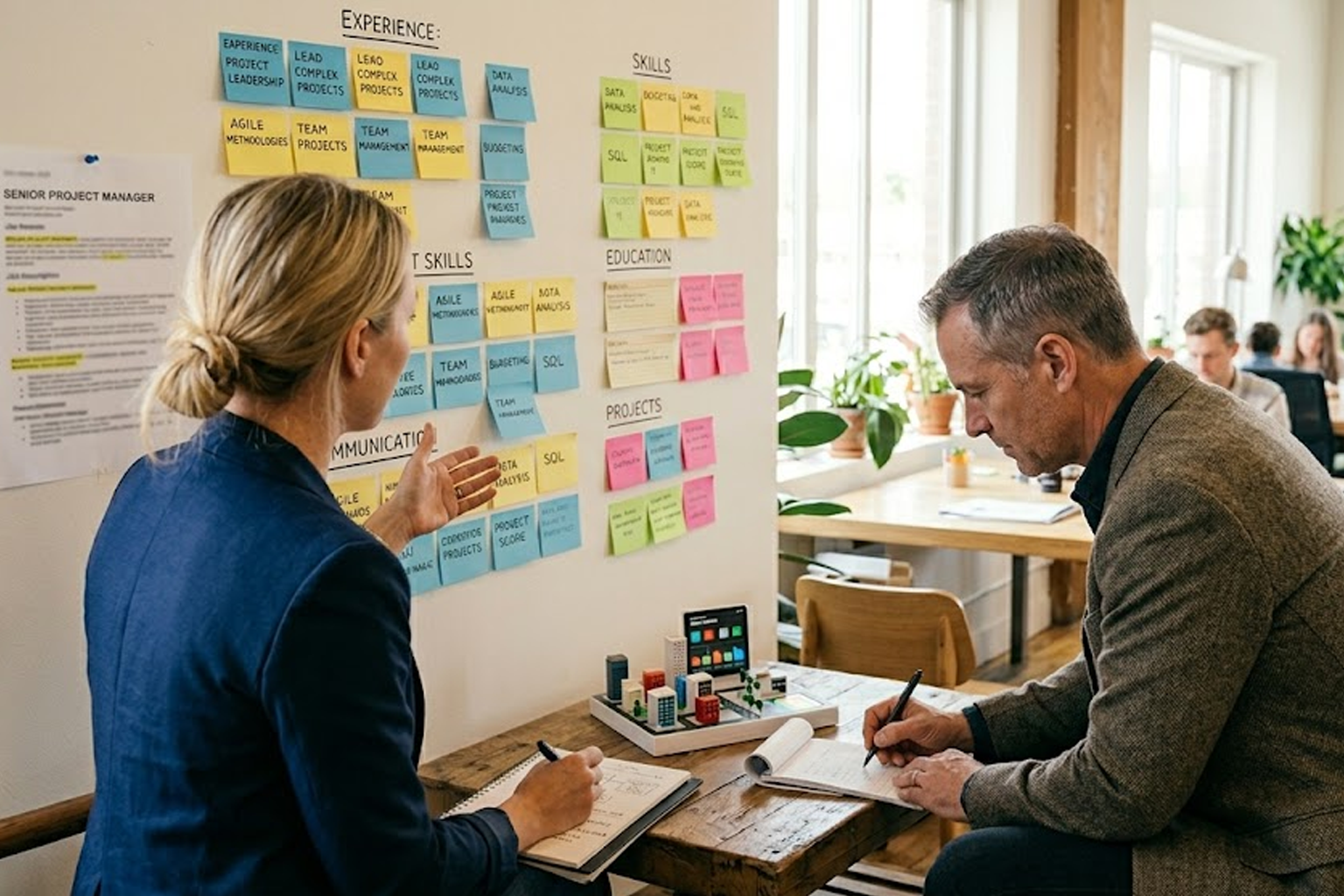
Many career uncertainties resolve when you test ideas in small, time-bound ways Mini-projects let you explore roles, skills and industries without major disruption They create quick feedback loops that inform next steps and reduce risk This approach favors learning and momentum over waiting for perfect clarity Starting small makes ambitious pivots manageable while preserving current stability.
Why mini-projects work
Mini-projects work because they convert vague curiosity into concrete evidence. By setting a short timeline and clear goal you experience realistic day-to-day work and responsibilities. This reduces bias from idealized job descriptions and highlights skills gaps and strengths fast. The approach lowers emotional cost while delivering learning that informs career direction. Even brief experiments can change hiring conversations and résumé narratives.
That learning often reveals whether a new path fits before major commitments. Use each mini-project to update your priorities and next experiments.
Designing focused mini-projects
Start by naming the question you want to answer — for example whether you enjoy client-facing work, managing a team, or building technical solutions. Keep scope narrow: define a two- to eight-week project or responsibility you can add to your current role or test externally. Identify one measurable outcome and a few activities that will deliver evidence, such as mock presentations, a small freelance task, or a short course with a portfolio piece. Allocate low-risk time and set simple success criteria that focus on learning rather than perfection. Keep documentation of your work concise so you can show evidence quickly.
- Shadow a colleague for two weeks.
- Complete a short client project or gig.
- Build a small prototype or case study.
These examples keep experiments practical and actionable. Tailor ideas to your constraints and professional values.
Tracking impact and iterating
Track both objective results and how the work felt day-to-day; combine quantitative signals with qualitative reflection. Record time spent, outcomes achieved, feedback received, and your energy or satisfaction levels after tasks. Review results weekly and adjust scope, intensity, or the type of experiment based on what you learn. Over time, patterns will show where to double down or step away. Share findings with mentors or peers to get outside perspective and accelerate learning.
Iterate quickly: short cycles let you refine assumptions and conserve resources. A series of small wins builds confidence and clarifies long-term decisions.
Conclusion
Starting mini-projects reframes career planning as ongoing learning and reduces decision paralysis You gain clarity without burning bridges or making impulsive choices Use measured experiments to turn curiosity into a sustainable path forward.
